Wednesday, September 5, 2012

Simple Strategies for Student Engagement


That tilte is very alliterative.  I just needed thesaurus.com a new word for engagement that starts with the letter "S." I didn't like any of the options...

Our district is investigating The Art and Science of Teaching by Robert Marzano (@robertjmarzano).  This is a review of Chapter 5.


As an aside.  I love this book.  I love it because it explains reasonings for doing each of the strategies below.  The science behind the strategy is sound but keep in mind that each piece of this puzzle has to work within your teaching personality and processes.  Doing every one of these strategies is not for everyone, in fact to some of us it just seems crazy to think about trying something like that.  Do what works for you, do what works for your kids, but NEVER be afraid to try some thing new!

From the "WELL-DUH" office:

  • If you can increase student engagement, student learning and performance increases.


Simple Strategies for increasing student engagement:


  • Take Brain Breaks! You can only focused for so long.  Sometimes just a change in elevation and surroundings elicit new responses and reactions.

  • Increase the physical activity of the room.  If you are doing a worksheet and you are committed to doing a worksheet.  Have students move from station to station completing the worksheet one at a time.  Any increase in physical activity in your room will increase engagement.  My favorite activity I ever did was when a group of my 6th graders acted out a skit to music on the water cycle.  No words were used just music and gestures.  It was the most memorable and fun activity ever!

  • Set a good pace.  Just like a race on the track setting a pace will allow you to meet your goals.  Pacing is key to the classroom.  A quick, urgent but not too fast pace keeps the room upbeat and lively.  Use music with a certain BPM can aid in keeping a solid pace.

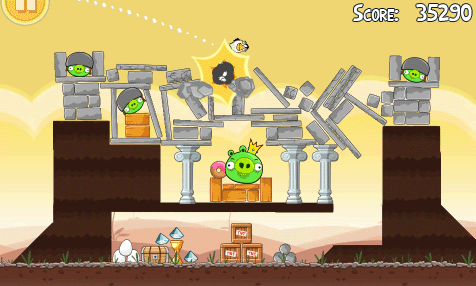
  • Use games and puzzles.  Sure you could change your entire curriculum into a game but you can also  just take your curriculum, your essential learning and turn it into a puzzle we in the class are trying to solve.  For example a science lesson may ask for students to be able to determine lights behavior when it strikes objects that are transparent, translucent and opaque.  I might change that to make it a puzzle by saying: Students will be able to determine __________ behavior when it ____________ objects that are _________, ___________, or _________.  Throughout the class we can begin filling in the blank and solving the puzzle.  By the way, actual games are fun too.  I once made a taboo and a pictionary game out of our vocabulary words and concepts from out chapter, I've never had so much fun in my life.  Everybody does Jeopardy, I wanted to be different...  I also centered my entire Force and Motion curriculum around the game Angry Birds.
  • MILD Pressure is good.  Using games and activities in the classroom elicit students engagement because there is a deadline, a competition, a healthy rivalry.  Use these as motivating factors but NEVER put too much pressure that a student shuts down or becomes embarrassed.

  • Wait time is key.  I watch a master teacher (my assessment of them) and when she would ask a question she would raise her arm.  While her arm was raised this was the time for students to think.  When her hand dropped she then would accept student responses or student raising their hand.  What I liked about this is it eliminated those slower to process the question and allowed every student the opportunity to think.  I am also a fan of the popsicle stick method with student names on them in a cup.  Making sure student never know when they will be called on ensures every student is engaged.

  • Choral response is great for BIG ideas and main concepts.  I love asking everyone to repeat a word or phrase.  That allows every student to know this is a BIG idea.

  • Controversy can be fun.  When you curriculum is centered around a BIG idea or Essential understanding what is exciting to see every student look at that concept from a different angle.  Host a friendly debate on the importance of various aspects of the BIG idea and encourage some dissonance around the issue.  This will encourage kids to debate and discuss and really investigate their personal beliefs and bias around an issue.  Everyone uses the example of global warming.  What about war in our social studies curriculum?

  • Provide usual information about your concept.  When you have little tips, tricks and fun things it makes your curriculum memorable.  For example My light and sound unit I taught in 6th grade was relatively boring at first.  Every day at the end as part of my wrap up activity I left them with an optical illusion.  This was something that made the day memorable and got them thinking and talking about science.
(do you see the old or young lady?)

  • Love and care about kids (not in the chapter I added it!).  I know it's odd to say Love but I'm not talking about romantic love, I mean that you arte compassionate, caring, open and honest with every student in your room.  They see you not only as their teacher but a real person that learns, makes mistakes, is fallible and true to them.  Caring and compassion are keys to a successful classroom engagement.

Tuesday, September 4, 2012

An exercise in transparency...

I've been approached these past few weeks asking: "what do you do all day?", "What does a Curriculum coordinator do?", "How does one coordinate curriculum?"  and "how do you determine which curriculums need coordinating?"

I also heard at a meeting today that I needed to be more visible.


All of these comments/questions (even though some asked sarcastically and some genuinely interested) made me realize today that there is a level of secrecy to what I do.  


  • I'm not in a building, I'm in every building.
  • I'm not in an office, I spend more time in other people's office.
  • I don't teach students, actually I help teachers teach students.
  • I don't report to a principal, in fact my boss is the Assistant Superintendant.
  • I don't coach on the field, I coach in the classroom.


Many more realizations come to me throughout the day but it all comes back to the fact that not even I know what I do.  My first year in a new district, doing a new job, learning with an AMAZING mentor,  without the guidance from a predecessor.   I have much to learn.

In an effort to fill in that gap, be more visible and even more transparent I created a blog: http://wgsdsciss.blogspot.com/ 

In my role as the Science and Social Studies Curriculum coordinator I have many written tasks but many more that are unwritten.  The unwritten ones I hope to communicate in my blog.

I have a great system for completing tasks.  I use remember the milk (website, app and integration to google calendar) to prioritize and write down to do list items.  I check them off and can complete, change priority and postpone when I run out of time on a task.


In addition as I begin this new job it's important for me to have the ability to reflect from year to year month to month, day to day.  I know if I do not reflect on my tasks and reflect on my role I will not be able to improve from year to year.  I'm hopeful that this blog will serve as that space.

Daniel Pink often talks about ways to be more productive in the workplace.  As well as ways to make your workplace more efficient.  Keeping in mind that workplace efficiency typically stems from happiness in your job.  This blog I created will give me that space to assess my efficiency and effectiveness.  (By the way, there's an app for that)

When people ask me what I do, I hope to have a better answer than "I have people skills...." :-)


Monday, August 27, 2012

Art and Science of Teaching: Chapter 8

Our district is investigating The Art and Science of Teaching by Robert Marzano (@robertjmarzano).  


Disconnected empathy.  That is the essential learning with this chapter.

While reading this chapter I kept thinking how much I take teaching personally.  It's my craft, it's my passion, but the chapter kept reminding me to disconnect and not take so much personally.

Here are my takeaways:


  • The quality of relationships is key to student learning
  • Everything comes back to "guidance and control"
  • How much are you as a teacher committed to the well-being of ALL participants
  • "We are a team here and succeed and fail as a team.  Additionally I have stake personally in the success of each one of you."
  • Be consistent
  • My biggest weakness is "The causes of many behaviors labeled and punished as rule infractions are, in fact, problems of students and teachers relating to one another."
  • Teachers need to be "considerate, buoyant, and patient."
  • Show the appropriate amount of dominance and cooperation
  • Have emotional objectivity
  • Brophy and Everston (1976) state: "professional view of their students looking upon them primarily as young learners with whom the interacted within the student-teacher relationship  elicited the highest result of student learning.
  • Classroom needs a sense of community
  • A teachers actions as well as their works are "listened" to by the students.
  • Teacher Enthusiasm is key
  • Use humor....when appropriate...
  • Action Steps for your classroom:
    1. Know something about each student, invest in them, get to know everything you can.
    2. Engage in student activities, go to their events, care about them and their families.
    3. Talk to every student every day, or as many as you can.
    4. Personalize learning (Blog posts on this one are plentiful: 1, 2, 3 )
    5. Smile, care, engage, interact, be interested...
    6. Use humor....when appropriate...
    7. Enforce both positive and negative consequence (this one I still struggle with) 
      1. Acknowledge when students follow the rules instead of just when they don't
    8. Practice removing yourself from the situation
      1. Listen, you are not going to love every kid.  Use a consistent tone.  Give them the benefit of the doubt.  What could have possibly make them act the way they did.  Reason with them, support them, it's not personal.

Curriculum Models

Let's take a trip through time....


Schooling first started with very little idea of curriculum.  Most of our models were designed from educators who had all the knowledge and served as leaders within their community imparting knowledge they had onto students and community. They were the gatekeepers to all things education.


Text book companies and government standards mostly due to military needs created a content crisis where standardization of the curriculum was necessary.  This generation of education led to the model of teaching students in rows, the obedient learner and the standardized assessment.


Similar to the 20th century model our current model sets the standards wether they be CCSS, NGSS, NCSS or whatever still focusing on standardization.  This thinking keeps us in rows and focused on performance on paper/pencil assessment.  


The 21st century model and current brain research shows that students have different needs than they did in the past.  To develop true transferrable knowledge and skill we need to engage students in a different way and elicit new kinds of thinking about curriculum, education, and student-centered learning.


As we continue down this path in the Webster Groves School District I am hopeful to continue to strive to push the envelop of traditional schooling.  Putting student passion, interest, problem, projects and games at the center allows for the personalization of learning.  This diagram above is just the beginning of our journey and will continue to be added upon as we develop more detailed and supportive part of the curriculum.

Friday, August 10, 2012

Communicating the "why"

I'm starting a new position in a new district as the Science and Social Studies Curriculum Coordinator.

This is VERY exciting!  Also very stressful.  (see my post on my complexion)

One thing I'm struggling with understanding is the "why" behind what we do.  I'm wondering if we communicate that enough.

We start every year with good intentions and lofty goals.  Do we ever communicate why we made those goals?  Often not.

I am working hard this year to not only put together a seamless plan but also communicate the why and how we will move.  I'm very focused on communicating not only the what, the how, but most importantly the WHY.  Also determining how we will know we've arrived....

Below I posted my WORKING DRAFT!  of our work this year.  Please feel free to give feedback and offer support.  I would also love to connect with other people doing this same work so don't be afraid to find me on twitter (cmcgee200 or wgsdsciss) 


Working Draft of Mission/Vision - The Why...

Mission:
The mission of the Science and Social Studies Curriculum is to instill in each student a passion for learning and the skills to solve global issues.  This will be accomplished by creating systems that meet the unique needs of each student through high expectations, innovative strategies, and partnerships with parents/community while increasing teacher engagement within the content.

Questions:
Determine common storage availability Server? Workgroup?

Assessment:
1.  MAP/EOC data as rated by dese
2.  Local summative assessment data (Quarterly) as rated by educators
3.  Ability for teachers to accurately personalize instruction (differentiation) as rated by survey
4.  Comfort of teaching Sci/SS as rated by teacher survey

Action Plan:
Phase 1: AST (Art and Science of Teaching) Chapter 1, 6, 10
Write curriculum map of content/skill
Write Learning goals referencing CCSS/GLE
Build database of activities/choices
Build database of Youtube videos, DVDs, United Streaming, websites
- THROUGH “LET” document


Phase 2:
Identify our essential vocabulary K-12
Identify essential questions
How will we track student progress
connect goals to GLE, SMS, and CCSS through highlighting/dotting

Phase 3: AST Chapter 2, 3
Determine scoring guide for goals
Determine activities by goal

Step 4: AST chapter 4
Write Assessment and scoring guide
Determine how report data/performance
Item analysis
Goal analysis

Phase 5: AST Chapter 10
revise/review how to grade assessment
Connect vertical alignment of concepts

Phase 6: AST Chapter 1, 3, 5, 9
How will we know if they “get it” (revise scoring guide?) (exemplars)
How are we tracking progress? Can we improve that?
What is effective feedback?
improve report results

Phase 7: AST Chapter 9
How to Pre-Assess knowledge and differentiate experiences
Reevaluate key vocabulary
Determine Anchor activities/projects/experiences
How are we giving feedback?

Phase 8: AST Chapter 6
Discuss and investigate grading practices
Discuss plan and proposition for revising grading resources
Discuss personalized learning
Improving Feedback

Phase 9:
Revise and improve


Factors impacting our progress
1.  Numbers on team
2.  Commitment to goal
3.  Fi/T = momentum (F=focus, i=intensity OVER time)
4.  ?????


Presentation Ideas:
About me
This i Believe = Tom Cruise
Hope = having something new to try and being willing to try it


Wednesday, August 8, 2012

Art and Science of Teaching: Chapter 6

This chapter is by far the area where I am the least strong.  I do not make great rules, I'm not really a great "rule follower" which I guess makes me a not great rule maker.  I do, however, L-O-V-E procedures.  I love routines and being able to automate my class to the point where kids know what to do when and the whole room runs like clockwork.

I only have two rules for my classroom:

1.  Accept any offer
2.  Make your partner look good.

These are two of the essential rules for improve as noted in this video:

When it comes to procedures, I feel like I have tons and students just seem to figure it out.  I take a great deal of time the first week.  I allow students to look around the room in a 10 minute no-holds-barred activity I call "Snoop Doggy Dog."  This is followed by a discussion about what was found.  I then take the students on a tour of the room.  We literally get up and walk the room like a tour guide.  I show them everything and anything and explain when and where we have things in the room.  I even go down to the point of explaining why I hung a picture in a certain location.  This helps communicate and explain all of my procedures.

While reading chapter 6 here were my highlights:

  • Students need rules to keep learning efficient
  • Don't be afraid of devoting time to teaching rules, practicing procedures and revising as the year continues
  • Rules and procedures need revising throughout the year.
  • Rules and procedures are best revised by having a weekly class meeting to discuss progress and process.
  • Classroom management receives top rating amongst all things that impact student achievement in the classroom.
  • Rules and procedures are best determined at the beginning fo the year.
  • "effective teachers spend a great deal of time establishing rules and procedures."
  • Students who have rules at home score "10 percentile points higher"
  • It is important to explain WHY you have a rule or a procedure
  • Be flexible with your rules and allow students to give input to change them.
  • "five to eight rules and procedures"
  • Create, Interact, review, meet about the rules
We have been recently looking into PBIS for our rules.  Here are ours.


Art and Science of Teaching: Chapter 1

Our district is investigating The Art and Science of Teaching by Robert Marzano (@robertjmarzano).  

I originally read this book in 2008.  I loved it.  I fell in love and used it to catapult my craft of teaching for the last five years.  Since taking a new job in a new district I have started over in more ways than one.

I'm going to use these spaces to post my largest takeaways from each section.  Enjoy, challenge me, question, use this to move yourself forward.  I'm excited for this new endeavor.

Here goes:

Introduction:

  • Schools have little impact on student achievement that is independent of their background and SES.
  • Better teachers yield better results from students
  • "Mathematical models are false" there are patterns but no certainties
  • No matter the strategy there is no silver bullet that works for every student
  • Effective teaching is 1-part knowing your students and 1-part knowing how to teach

Chapter 1:
  • "Set goals, track progress, celebrate success"
  • "Goal setting has a general tendency to enhance learning"
  • Feedback is as important as goal setting
  • Celebrating effort is as important as progress or product
  • Capitalizing on student interest has a positive effect on student motivation
  • "A learning goal is a statement of what students will know or be able to do."
  • Two kinds of learning:
    • "declarative learning: informational in nature"
    • "procedural learning: Strategies, skills, and processes"
  • After a learning goal, write a rubric.
  • Have students write what they know, want to know so you can wrap up with what they learned in a unit. (KWL strategy)
  • Even though teachers make a rubric, let students make their own student friendly version.
  • Challenge students to track their own progress and take charge of their own learning.