Showing posts with label education. Show all posts

Thursday, April 7, 2016

The importance of ketchup when building a team

I recently was listening to one of my favorite podcasts “Reply All.”  listen here:


They were interviewing Scott Page (TIME: 22:29), a professor of complex systems at the University of Michigan and an external faculty member at the Santa Fe Institute.  And his connection between the lowly condiment and building a team struck me!


"SCOTT: Now turns out if you’re British or if you’re African American from the South, not as a rule but generally speaking, you’re likely to keep your ketchup in the cupboard. If you’re not British and you’re not African American from the South, you tend to keep your ketchup in the fridge. And you could think “Vive le difference, who cares, right?” Well it actually does matter because suppose you run out of ketchup. If you’re out of ketchup and you’re a ketchup in the fridge person, what are you gonna use? Well you might use mayonnaise, you might use mustard because those are things you think of when what’s next to the ketchup. If, alternatively, you’re a ketchup in the cupboard person and you run out ketchup, what’s next to the ketchup in the cupboard? Well, malt vinegar.


GOLDMAN: So, the more diverse the backgrounds, the more associations you get, and the more paths towards solving a hard problem.


And there are actually a lot of real-life examples of this. Carl Zimmer, a science writer for the New York Times, he says that the ketchup story completely tracks with what he sees in the science world


CARL ZIMMER: You know if a scientist is looking at a problem and thinking about how am I going to solve it, there’s a range of approaches that they may think of just based on their training. You know, and they can’t even imagine that there’s another way of approaching it. You know, they can’t imagine that there’s ketchup in the pantry, really. And the fact is that another scientist can walk in and be like,“Oh, look, you’re looking at this totally the wrong way.”
That’s it!  The importance of building a great team is being able to understand where you keep the ketchup.


In all the profiling tools I’ve used, Strengthsfinder, Gallup, Myers-Briggs, Kolbe index, etc.  All of these tell me about who I am and how I work.  The importance of building a team is taking time to ask these kinds of questions, uncover the way we think and work and then build the best, most diverse, team possible.


So, the next time you’re building a team, pass the ketchup!


Do you want more innovation at your school, business or team? Focus on diversity!


Tuesday, April 1, 2014

Summary of "Remodeling Literacy Learning"

Cross Posted on my work Blog here: http://wgsdsciss.blogspot.com/

Find the original PDF here:  http://www.literacyinlearningexchange.org/remodeling-together


The report started with a survey:
The "NCLE conducted a national survey of educators of all roles, grade levels, and subject areas to find out where we stand as a nation in the following areas:
• What kinds of opportunities have educators had to learn about the new literacy standards?
• What kinds of professional learning are most powerful in supporting teachers as they implement changes in their classrooms?
• How are schools and districts approaching the transition to the new standards, and how involved are teachers in planning and implementing that transition?
• Are teachers working on the change individually or collectively, and how does that impact how well the change is going?
• What role is teacher expertise playing in translating the broad goals of the standards into specific learning experiences for students?"

Page 4 FINDINGS:

PAGE 8 FINDINGS:

pg. 9 "Data from NCLE’s 2013–14 survey demonstrate the potential of the teacher-driven, capacity- based model of educational change. Put simply, the transition to the new standards seems to be going best when teachers are highly engaged in the process and have time to work together to use their professional expertise to bring all students to higher levels of literacy."

pg. 11 "In our 2012 national survey on teacher learning, we asked educators to identify their single most powerful professional learning experience of the past 12 months. The number-one choice by a large margin was “co-planning with colleagues,” cited by 22% of respondents. Coming in second, chosen by 13% of respondents as their single most powerful professional learning experience, was “meeting regularly with a collaborative inquiry group.”"

pg. 11 "Respondents could choose up to three reasons, and the top three all speak to the power of professional collaboration to impact classroom practice:
• Helped me create new lessons, materials, or instructional strategies for immediate use (selected by 59% of respondents as one of the top three reasons the learning was powerful)
• Provided opportunities for active learning, discussion, and reflection on my practice (34%)
• Provided opportunities to collaborate with colleagues/to create a support network (32%)"

pg. 11 "This result is consistent with extensive research showing that educators find professional learning most powerful when it affords them the opportunity to actively exchange ideas with colleagues and test them in their practice immediately."

pg.11 Working with colleagues is GOOD!

p.12 "This year’s data show that over the last year teachers have become even more isolated from each other’s professional expertise, even as they are being asked to undertake the large, complicated task of CCSS implementation."

pg.12 DATA!


pg.12 "Good teaching requires deep understanding of the goals we are trying to help students reach, analysis of their current level of understanding, and careful design of learning experiences, all of which are tasks that require professional time outside of the classroom and are best accomplished with the support of colleagues."

pg. 13 "Beyond being given little time to work through the shifts called for by the standards, most teachers reported having little voice in how their school is making the transition."

pg. 13 GRAPHIC

pg. 15 "Compared to teachers who are working in isolation, teachers who had participated in collaborative work with colleagues around the standards were twice as likely to rate themselves as well prepared to help their students meet the standards and also much more likely to report having already made moderate or significant changes in the content of what they teach and methods of how they teach it in response to CCSS goals."
pg. 16 "Research has consistently demonstrated the value of teacher collaboration in improving student learning,"

p.16 Keys to effective collaboration
"(1) Deprivatizing practice: Teachers open their doors and their briefcases to share lessons, actual teaching, and student work with each other, so they can learn from each other’s successes and, perhaps even more important, failures.
(2) Enacting shared agreements: Colleagues agree at a concrete, specific level on the student outcomes they are working toward and how to assess them.
(3) Creating collaborative culture: Teachers demonstrate accountability to each other by following through on trying new instructional practices between meetings and reporting back on results, and they trust each other enough to engage in hard conversations about what works.
(4) Maintaining an inquiry stance: Experimentation is grounded in evidence and focused on clear student outcomes.
(5) Using evidence effectively: Teachers decide whether a lesson or practice worked and how it could be improved by analyzing evidence from students, from test scores to samples of student work.
(6) Supporting collaboration systemically: Teachers’ shared work receives formal support including protected time, relevant and timely data, and leadership involvement."

pg.18 Teachers need more time
pg. 18 "Looking at practices like lesson study in Japan and periodic curriculum reviews in Finland points to some answers: these are structured, purposeful tasks which immerse teachers deeply in the substance of what they are teaching, the best methods to get concepts across to students, and how best to assess student mastery. Most of all, these structures provide a lab-like setting, an ongoing cycle in which ideas are developed, tested, and refined, tapping the collective insight and practical experience of multiple teachers to strengthen learning for all students."

pg.19 "We then looked at whether teachers who frequently engage in specific collaborative tasks report being better prepared to teach the standards."

pg.19 What works when teachers work together

pg.21 "Professional learning that is embedded in the real work of instruction is far more likely to lead to desired changes. Such tasks let teachers pool their insights and experiences and adjust their practice in real time"

pg. 22 "When asked specifically how big of an impact standards are having so far on classroom practice in terms of both what is taught and how it is taught, solid majorities of teachers across subject areas reported a moderate or significant impact on HOW material is taught. There was more variance in the reported impact on WHAT is taught."

pg. 23 "The most consistent shift reported by teachers in our survey is in spending more time having students defend arguments with evidence, which more than three-fourths of teachers in all subject areas report doing more of this year in response to the CCSS."

pg. 23 "The bottom line is that these standards ask students to work collaboratively and analyze evidence coming from multiple kinds of texts that cross disciplinary lines. This is going to be difficult to pull off if teachers of different subjects remain isolated from each other and so many have minimal to no time to work together."

Recommendations


pg.28 "Recommendation #1: Provide educators with more shared time for planning and professional learning about elevating literacy learning for all students."

pg.29 "Recommendation #2: Encourage and support educators to take initiative in designing and using innovative literacy teaching resources that are appropriate for their students, and not rely on prepackaged programs or solutions."

pg.29 "Recommendation #3: Draw upon the insights, skills, and experience of everyone with a stake in improving literacy learning to help students achieve more."

Pg 29-30 HOW TO:

"Principals and School Leaders Can . . .
• Allocate and protect time for teachers to work together in developing literacy instructional practices and in analyzing student work.
• Provide training, support, and structures that make teacher collaboration time purposeful and effective.
• Build trust among staff by participating in groups not solely as an instructional leader, but also as a collaborative colleague.
• Respect the expertise of teachers in building-level decisions about literacy teaching materials and curriculum and in the application of formative and summative assessment data to instruction.
• Monitor and understand emerging research about literacy learning and educator collaboration, making this a focus for their own professional growth.
• Make literacy learning in every subject a school-wide priority and establish a structure for staff-wide participation in planning and monitoring progress toward the attainment of student literacy growth goals."

"Teachers and Other Educators Can . . .
• Engage in focused, purposeful collaboration with colleagues (both in person and online) about instructional shifts that can be made to deepen student literacy learning in every class.
• Open doors and share practice so that others can learn from both successes and failures.
• Commit to continuous, collaborative assessment and analysis of student work and agree to
shift their strategies as they learn more about students’ progress as literacy learners.
• Demonstrate accountability to each other and to students by developing and documenting
shared plans for deepening student literacy learning across a school year.
• Build professional capacity by choosing literacy teaching strategies and materials based on
learning from collaborative activities with other teachers.
• Tap the literacy expertise that resides in all subject areas and job roles (including coaches,
librarians, and administrators) to build a coherent school-wide literacy experience for students."


Tuesday, March 19, 2013

Questions inspired from Steve Jobs

I just recently finished the Steve Jobs autobiography.  The book was amazing and fun and irreverent, much like I'm sure Steve Jobs was.  There were many take aways and highlights that influenced my thinking about leadership and education.  It also inspired more questions than answers.


I'm going to use this post to pull out those highlights, connect them to education, and offer up questions to ponder, reflect on and give you space to determine if you value these same ideals.


"The people who are crazy enough to think they can change the world are the ones who do." - Apple commercial 1997


  • How can we "think differently" about our education system?
  • How can we think diferently about (insert idea: RTI, student discipline, teaching, instruction, testing etc.)

Moore's law, founded in 1965, states that technology will exponentially grow in capacity but cost will steadily decline.


  • With technology more than proving Moore's law, how is education reacting or capitalizing on the capacity?
  • Are we charging too much for what we are getting?
  • When will we reach capacity for technology?

Steve Jobs hated school: "I knew school was at fault for trying to make me memorize stupid stuff rather than stimulate me."


  • How has school changed since Job's was a student?
  • Are we still asking the brightest students to memorize stuff?
  • When will "standards" seek to focus on processing skills vs content knowledge?

"If it hadn't been for the blue boxes, there wouldn't be an Apple."

  • Where, in school, do we let kids tinker and play?
  • Where, in school, do we inspire new ideas from students?
  • Where, in school, do students get to take charge of their own learning?
"I learned the truth of the Zen saying that if you are willing to travel around the world to meet a teacher, one will appear next door."
  • Can we learn from this that readiness for learning is crucial?
  • What if students drove the learning?  Student interest will bring the curriculum to them when they are ready.
  • When we are hung, we eat.  Not vice-versa.  How does this relate to teaching and learning?

"The sixties produced an anarchic-mind that is great for imagining a world not yet in existence."
  • When will our educators of today live through their "sixties"?
  • Will our undergraduate programs that are creating the next generation of teachers create this same environment?
Woz started a computer club who's theme was 'Give help to others.'
  • This was the ethos of hackers and open source, what in education are you allowing to be open source?
  • How are you contributing from the open source environment?
  • How are student contributing?
Apple Marketing Philosophy:  Empathy, Focus, and Impute
  • Are we empathetic in what we do?
  • Do students have a "voice" in our classroom?
  • Are we responsive to student needs?
  • Are we surrounded by standards and goals, can we live without some of them?
  • Does our facility, our classroom, our environment influence behavior and aspirations?

"You did the impossible, because you didn't realize it was impossible."
  • How often do we say "Well, that's too difficult for a _____ grader?"
  • Do we give kids the ability to dream?  Can we give kids the space to create their own "possible?"
"By expecting them to do great things, you can get them to do great things."
  • Are our expectations of students, colleagues and supervisors too low?
"Mac retreat highlights: Don't compromise, The journey is the reward, people don't know what they want until we've shown them."
  • How often do we settle for good enough?
  • Why do we focus on grades and outcomes when we could be celebrating the process and the learning?
  • When we share new and exciting experiences with students, when we can bring in or take students to meet passionate and successful adults we can open up doors to possibilities.  Are you?
"In the first 30 years of your life, you make habits.  For the last 30 years your habits make you."
  • What habits are we teaching our students?
  • Are we teaching students habits that will make them successful later in life?
  • What are the most important habits?
Jobs said: "Your thoughts construct patterns like scaffolding in your mind.  You are really etching chemical patterns.  In most cases, people get stuck in those patterns, just like grooves in a record, and they never get out of them."


  • What grooves are you in?
  • How are our students "stuck"?
  • How do our habits shape our thinking?

What prepared him for the great success Jobs would have in Act III was not his ouster from his Act I at Apple but his brilliant failures in Act II.
  • When can we allow students to fail, while with us, so they don't fail away from us?
  • When can we give students and colleagues the opportunities to try something new and take risks while support is still there to help?
  • How can we be Act II so student's post secondary career is their Act III?

Alice: Through the Looking Glass, "Why, sometimes I've believed as many as six impossible things before breakfast."

  • When do we let kids dream?
  • Do we inspire dreaming?  Or punish it?
  • Do we ask kids to strive for their dreams or reach for what is right in front of them (the what's possible)?


Jobs: "I think you still have to think differently to buy and Apple computer.  The people who buy them do think different.  They are the creative spirits in this world, and they're out to change the world.  WE make tools for those kinds of people."

  • What kind of students does our school produce?
  • What kind of students do we want to produce?
  • Are we creating the right environment and hiring the right people to help us achieve that goal?
Job learned that "a properly run company could spawn innovation far more than any single creative individual. 'I discovered that the best innovation is sometimes the way you organize a company'"
  • Is your building or district arranged for innovation?
  • Most schools I see are set up to handle stimulus, not many are set up to create stimulus.
  • How would you change the way your building or district is organized to be forward inspiring instead of reacting?
Apple uses "Deep collaboration" or "concurrent engineering."  Jobs realized 'A' people want to work with 'A' people.  


  • Does our hiring process reflect our values?
  • Do we have 'A' players?  How can we pair them with other 'A' players?
Once a year Jobs took his most valuable employees on a retreat, which he called the "Top 100."
  • How do you recognize the outliers in your organization?
  • How do we get the top students/teachers/administrators together?
  • Does your district collaborate with other districts to bring together the best to inspire new ideas and next practices?
Jobs on presenting: "if you need slides, it shows you don't know what you're talking about."
  • enough said...

  • How have you utilized technology to improve your organization or classroom?
  • Can you see past your current reality to the next innovation?
In order to institutionalize the lessons Jobs was learning, Jobs started an in-house center called Apple University.
  • How do we share the lessons we learn?
  • How do we create learning opportunities for every person?
  • Do we have a culture of learning and sharing at our institution?
  • How are kids sharing what they are learning?

When our tools don't work, we tend to blame ourselves, for being too stupid, or not reading the manual or having too-fat fingers...when our tools are broken, we feel broken.
  • How are we ensuring students and staff experiences are quality and don't allow for people to feel broken?
  • Have we thought through possible scenarios that happen in our day to ensure we are providing experiences for people that empower them instead on marginalize them?
In the closed versus opened, integrated vs fragmented
  • Why do we continue to purchase resources and textbooks we often go with the lowest bidder.  If we really want a seamless environment, we should create or curate the resources ourselves.
  • Isn't our school date fragmented and closed, isn't that the worst possible scenario?
"We're doing the best we can, we're learning as fast as we can-but we thought this rule makes sense."
  • When do we apologize?
  • How do we apologize?
  • When do we take on our policies and practices to ensure we're learning and they are growing?
  • Do we have a procedure to call our rules into question?  Does that involve students and our community?
The whole world is the same now.
  • The kid in Turkey has access to the same tools as the kids in Canada, has your classroom changed?
  • When kids are allowed access to devices, they learn what they are interested in and what is available to them. SOLE project

"Teachers should be treated as professionals, he said, not as industrial assembly-line workers.  Principals should be able to hire and fire them based on how good they were.  Schools should be staying open until 6PM and be in session eleven months of the year.  It was absurd, he added, that American classrooms were still based on a teacher standing at a board and using textbooks.  All books, learning materials and assessments should be digital and interactive, tailored to each student and providing feedback in real time."


Friday, November 30, 2012

WAR, What is it good for? Absolutely EVERYTHING?

W.A.R. in baseball stands for "Wins above replacement."  It's a baseball statistic described by wikipedia as: 

Wins Above Replacement, commonly known as WAR, is a non-standardized sabermetric baseball statistic that is used to show how many more wins a player would give a team as opposed to a "replacement level", or minor league/bench player at that position.  
From http://en.wikipedia.org/wiki/Wins_above_replacement


Edwin Star believes has his own belief about War.  He asks "War, what is it good for?"  
He claims "Absolutely nothing."


I could not disagree more!

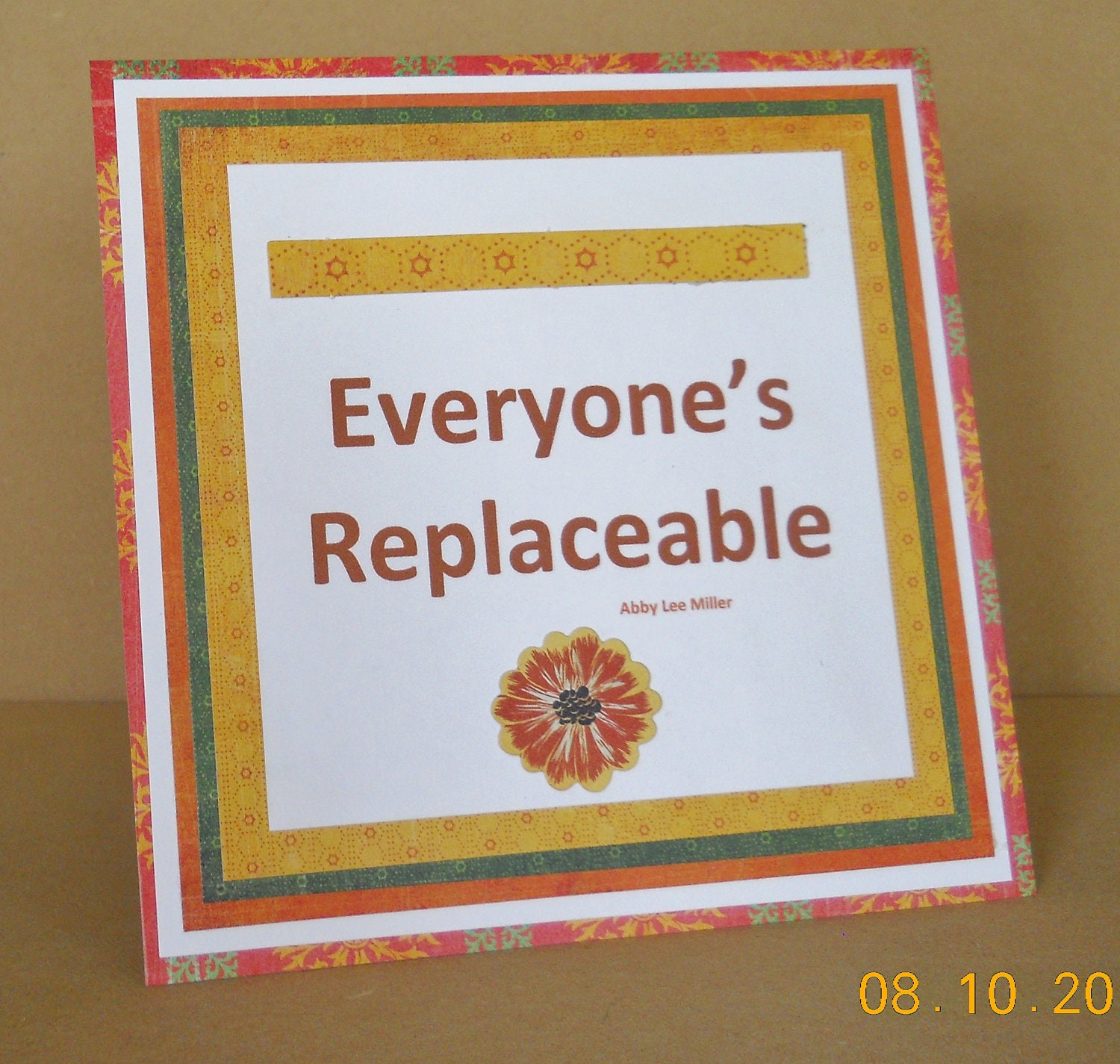
When we think of WAR, wins above replacement this makes me think of education.  Wins above replacement (a sub).  When I walk into a class are you providing a learning experience unlike any other.  What is your WAR?

When I first started teaching I always strived for a classroom that "ran itself."  When I work with teachers and talk about "flipteaching"  teachers always ask "Well, what will they need me for then?"  


If you think a video can replace you, then it should!

The environment you provide, the relationship you create with a student, the desire to learn you grow, collaborating and connecting with students families and the community impact your WAR.

When you think about what you provide every day for students.  Are you providing an environment, an experience, a lesson that is statistically better than a replacement could give?  What added benefits are you bringing to the table?  

Challenge yourself every day in your school to provide a unique opportunity that is special.  Build lasting, compassionate relationships with students and families.  Ensure that your connection and experience you provide is without replacement.

They always say:


That may be true for the next warm body to fill the space.  But I guarantee their WAR won't be as high as mine.

So you ask, "WAR, good God y'all, What is it good for?"  Possibly EVERYTHING?!

Mad props to @mrsenorhill, @ideaguy42, @ahintofcinnamon, and @desertdiver for the idea for this post.

Tuesday, November 20, 2012

What is the next chapter for edcuation?

Today I had the opportunity to watch Bill Rankin's discussion on the next page of education:


My takeaways:


Amazing technological changes don't do a thing to culture.
  • The problem with education is us...
  • "We use to do it this way, now we'll do it a slightly different way..."
  • We've seen the enemy and it is us.  
  • I want to see my students learn more, then in-turn don't I need to learn more?
  • Letting other people move ahead gives us an excuse to not to.

We cannot focus on the technology without focusing on the culture.

  • It's time for everyone to be involved.
  • All contributions are important.
  • New technologies allow us to localize education.

SHIFT in education must move the students to the center:

  • Customizing education to fit YOUR needs.
  • Getting the tool "I" need means we cannot have a one-size-fits-all solution.
  • When will we realize we are teachers first and content specialists second?
Engagement

  • How are we ALL connected?  Why aren't we capitalizing on it?
  • Increasing anytime and anywhere learning.
  • How long until the tools become invisible?
  • The days with the single teacher in front of the class with the book has passed.
  • Teachers are becoming CO-LEARNERS.
  • How can kids get prepared outside of class to go in-depth inside of class.
  • Every child needs to have THEIR OWN personal device.
We are at the beginning of the SHIFT to ubiquity of access.  

  • We are heading to a mobile environment.
  • Kids are significantly ahead of us as teachers. (we often get in their way)
  • Kids have games and life apps on their mobile device.  We are missing the opportunity to design GREAT apps to engage students in learning.
Instead of letting technology influence the classroom, let's think about what we want our classroom to look like.  

  • Keep the outcomes in mind!
  • Technology is focused and supportive to the goal.
  • Funding is an issue.  You've got to "bring your own."
  • Assessments need to be embedded.
WOW! as we continue to discuss curating our own textbook.  I continue to wonder.....

  • Will a Digital resource or really anything technology related change the culture?
  • How do you change the culture of education in your building or district?
  • How can we SHIFT the focus from the teacher to the learner?

Tuesday, October 16, 2012

Textbooks: They Just Don't Add Up

I'm going to be blunt: I hate textbooks.

I've been in my new position now for a couple months and I have heard so much discussion about textbooks that really frustrates me.  I'm working on how to have this conversation and here are my selling points:


First off, I read a Genius post by Tom Whitby @tomwhitby:
http://tomwhitby.wordpress.com/2012/03/20/we-dont-need-no-stinkn-textbooks-beyondthetextbook/

Second, I borrowed the technique of the math from Tony DiLaura @anthonydilaura


Now, here's some math I'm going to use to have conversations with my colleagues:

Buying 40 books per 4 teacher team:

$67/book x 160 books =
$10,720


So let's work with that budget:


What if teacher’s made the “book”?

4 teachers = $100/day (for subs) = $400/day


At $400/day we could take 4 teachers out of the classroom for 26.8 days and create a textbook of our own.


Can we make a better book in 26.8 days?

That's not ideal AT ALL, but at least it seems doable.

Now imagine if we "paid" teachers to do it outside of the work day.....


If we assumed $15-$20 per hour in the summer/after school time x 4 teachers/grade level for a total of $60-$80 per hour....

the $10,720 budget to pay teachers would mean we could have anywhere from 134 to 178 hours of work to pay (dare I say invest in) teachers to make their own book.

Can we do it better? Can we do a better job of keeping it updated? Allow it to be ours?

What if we "OPEN SOURCED" our learning?


Can you believe that video is from 2006!!!!!!!!!!!! And we are still having this conversation.


I mean let's be crazy:

What if we published it and sold it online? To schools and homeschool organizations?


I know I drank the "apple Kool-Aid," but
Let's be honest, they do it better...

There are many pieces of technology available to help us.  What if we purchased 4 Macbook Airs ($4000) and downloaded the iBooks Author Software (FREE) (Tony's How to) as well as the pages app ($40) that leaves us with over $6000 to pay teachers or subs to make our own book....

I just don't get it, let's just face it, purchasing textbooks just doesn't add up...

Saturday, September 29, 2012

Two words I should never read....

I have had the pleasure of being on two very impactful strategic planning teams.  Being able to bring together community members, board members, educators, students and administrators all in the same room and creating a vision for the future is life and career-changing.

Being a part of those two processes has changed me as an educator because I was a part f a team that created, authored, curated, and gave words to what we as a community believe, value, and desire for our students and our nation.

As part of the process we determined what factors impact our students and community.  Think of it like a SWOT activity.

We recorded our beliefs about students and education as a whole.

Throughout this entire week-long process together we were crafting our mission and vision.  I first had to understand that those were two different things.

Finally if we were to achieve our mission/vision, how would we get there.  What would be our charge and how would we progress.  The key to this phase of the process is to not think about today, but think of the end product.  What will education look-like, sound-like and be-like for students when we achieve our actions.  Challenging yourself to look at environment that doesn't exist yet is not an easy task and requires talented people to move you out of your comfort zone.

This brings me to the reason for my post.  I just read a district's strategic plan and two words I read should never be included:

Maintain
and
Adequate

I struggle with both of these words because it's not strategic and it's not a plan.  Status quo is not a vision for the future.

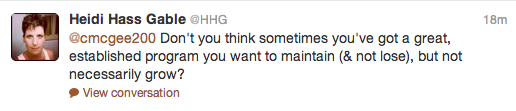
As I was challenged by Heidi on Twitter (who is awesome by the way, you must give her a follow!), 


Then it's not a part of the "strategic plan."  It would become a part of your beliefs about what impacts student performance or school and community environment and that you know it works and it is valued.  

A strategic plan is a vision for the future, what you want for the generations ahead of us.  A careful consideration of what we value, what we want and what we believe. 

I know innovation isn't for every community.  I know change is scary.  If status quo is a belief and good enough is valued as "strategic" we are missing a wonderful opportunity to grow, be challenged and provide for all students.

Thursday, April 12, 2012

What we all can learn from Caine's Arcade

I saw a video today that just went viral. WARNING:  Inspiration will follow!


Okay, I cried!  Did you?

How often as teachers do we miss out on this opportunity because we have to meet the next objective or plan the next activity.  How often to we miss out on opportunities to change the lives of students?  How often do we not seek to inspire?

Seth Godin's amazing FREE ebook "Stop Stealing Dreams" asks us as educators to imagine a world we we can capitalize on students interests and passions and eliminate destroying them.

Dan Pink's book Drive and TED talk on motivation inspires us as teachers to create opportunities for students to increase the autonomy they have inside the walls of our school day.

I have been wrestling with personalized learning in my classroom.  I've been doing 20% time all year.

This video confirms that what I've been working on, When we as educators focus on the individual student.  When we are able AND WILLING to capitalize on the passion and interest of a student we can find our goals and objectives, we can find our curriculum, we can find more than just test answers but life-long skills.  The key to student learning is truly personalization.

I'm happy and excited for Caine, I'm more excited for my teachers and students that I can share this story with, maybe we can help create more opportunities for imagination, innovation, and creativity in our days ahead.


Wednesday, January 4, 2012

Countdown to Edcamp

Interviewer: Where have you been why have you not been posting?


Me: Well you see, I've been doing a few things here and there.  Mostly innovating my classroom with flip teaching, standards-based grading and personalized learning plans. Oh, and I'm helping to organize a little thing called EdcampSTL.


Interviewer: What is EdcampSTL?


The edcamp concept is based on the unconference format where the participants drive the learning based on their passions and interests throughout the day. Upon arrival, each of you will be able to sign up to facilitate a session of your choosing or choose to be a participant in a session. There will be ten choices for each of the four sessions, and if at any time, you want to start a new conversation, it is just a matter of finding a few chairs, a few friends, and the learning begins again.  Undoubtedly, you will leave the day with new knowledge, new connections, and new energy about the possibility of educational innovation. We will start at 8 a.m. and finish before 4 p.m. The idea is fast and furious learning with an expanded learning network.


Interviewer: Sounds easy, How hard could that be?  You mean, you don't organize any of the speakers or anything?


Me: No.  It's all grassroots, so I just help provide the forum.


Interviewer: Man. So, basically you just open the doors, hope people show up, and that's it.


Me: There's a lot more to it than that.  In fact, I'm working off this list right now....


A month before Edcamp
  • Follow up with building principal
  • Follow up with donations
  • Create work order for tables and chairs, go through details with head custodian
  • Create training opportunity for student council representatives to act as greeter/ushers
  • Ensure building access and alarm codes


A week before Edcamp

  • Organize donations
  • Copy map of building
  • E-mail staff regarding the use of the building and their rooms
  • Make signs for Wi-Fi passwords and instructions
  • Make signs for rooms presentation/collaboration (USE SPONSOR LOGOS)
  • Find these supplies
    • Dry erase markers for every room
    • Post-it notes for student center (is this for the board?)
    • Extension cords for every room
    • Powerstrips for every room
    • Table cloths?
    • Name tags for tweetup, event, happy hour
    • Sharpies
  • Who do I call if there is a WIFI Emergency? _________________________________
  • Who do I call if there is a Fire Emergency? pull the alarm
  • Who do I call if there is a Medical Emergency? 911
  • Who do I call if there’s a custodial Emergency? ________________________________
  • Who do I call if there is an Emergency? _________________________________
  • Start gDoc with everyone’s name/ school/email/twitter, etc
  • Ensure heating work order went through
  • Make sure “Things You Can't Do in School With Kids in the Building” activity is set up
    • Determine activities
    • Determine materials
      • 8 markers
      • 8 people needed
    • Determine spaces
    • Make signage
  • Who’s running check in? _________________________________
  • Who’s setting up breakfast? __________________________________
  • Who’s cleaning up breakfast? __________________________________
  • Who’s running LATE check in? _________________________________
  • Who’s setting up lunch? __________________________________
  • Who’s cleaning up lunch? __________________________________
  • Acquire projector and laptop for tweets
  • Write welcome talking points
    • Sponsors
    • Signage
    • Wifi
    • phone numbers
    • from the rooms
    • Presentation rooms
    • Gathering rooms
    • leave the school better than you found it
  • Find out how to work the intercom
  • Make box for FORMS: Things You Can't Do in School With Kids in the Building

The night before Edcamp
  • GET THE MASTER KEY
  • Make boards for entrance and directions and set it up
  • Check Wi-Fi
  • Get microphones for N.Gym
  • Have signs up for Wi-Fi passwords and instructions
  • Mark rooms with signs that will hold sessions
  • Walk through and check out the technology hook ups, projectors, etc.
  • Set up post it board
  • Set up projector and white wall
  • Coolers? Ice?**
  • Ensure spaces have supplied we need
    • Dry erase markers
    • Post-it notes
    • Extension cords
    • Powerstrips
    • Table cloths?
    • Name tags
  • Create post edcamp survey...possible question include
    • What did you think of the physical location?
    • What did you think of the date of the event?
    • What did you think of the length of the sessions?
    • How did you first hear about this EdCamp?
    • Do you have any suggestions for publicizing the event next year?
    • What was your favorite part about the day?
    • What do you think could be improved upon for next year?
    • Would you be interested in being on the organizing committee for next year’s EdCamp?
  • Bring sharpies and name tags to TWEET-UP
  • Ensure breakfast room set up
  • Ensure welcome table is set up
    • make sure there are enough name tags and sharpies
    • Print check off sheet from MLP and eventbrite
  • Set up electronic sign outside of building.
  • Take a before picture of every room.

Morning of edcamp
  • Check list with names or Eventbrite Ipad/iphone App
  • Ice down drinks
  • ASSIGN Greeters
  • Check Wifi

During Edcamp
  • Who’s running check in? _________________________________
  • Who’s setting up breakfast? __________________________________
  • Who’s cleaning up breakfast? __________________________________
  • Who’s running LATE check in? _________________________________
  • Who’s setting up lunch? __________________________________
  • Who’s cleaning up lunch? __________________________________
  • Take lots of pictures
  • update wiki often
  • ensure a record of the days events OUTSIDE of twitter
  • Who/Where will collect “Things You Can't Do in School With Kids in the Building” FORMS for prizes
  • Set up table in gym with giveaways and prizes

After Edcamp
  • Empty trash in every room
  • Shut down computers in every room
  • Room set up okay?
  • take down all signage
  • Send follow-up thank you e-mail
  • Send e-mail thank you to all sponsors.
  • write a post event report
  • compile all resources by going through twitter stream
  • Send out survey
Interviewer: Oh, so you are busy.

Me: Oh, and I graduated with my doctorate. So, yea, a little busy, but I have great help.... Are you coming to EdcampSTL?

Interviewer: I am now.

Me: See you there!

2/11/12