Showing posts with label Dr. McGee. Show all posts

Monday, January 16, 2017

The Importance of Interaction

I've been thinking alot lately about interaction.  The simple human to human interaction we have every day.

I firmly believe that in every human interaction we have the choice and ability to EMPOWER, INSPIRE others.


I know that sounds silly, but I feel like it's true.  We bring energy into every space we enter.  That energy is felt by others and then transmitted throughout their world.  In other words, our simple interaction with have with another human is like a pebble in a pond which create a ripple.


So what does that have to do with learning and schools.  Well, imagine this, every interaction we have with our students matters.  Check out this video:


Every opportunity, every interaction, every word that is uttered, it either adds to, multiples, or takes away and divides.


I was recently at a school and some of the words and phrases I overheard were:

  • Don't Touch my things...
  • Pick your lab partner because I don't like to change seating charts. 
  • Can you come back in 5 minutes this is the boring part.
  • I will eventually get to know kids. I can't get behind the pacing guide.
  • If you can't get the work done we will help you..
  • You know it's (blank) and then (blank)....
I also saw a poster like this hanging in a classroom:

Think about those words and phrases listed above.  Do they inspire something better for others?

What we do each day matters, and more importantly every interaction (face to face, through email, over the phone, etc.) matters.  

Embrace each day as a choice to either ADD TO, Multiply, Create, EMPOWER, Inspire:

Fill buckets, post 'UP' arrows, whatever you need to do to remind yourself about the impact you're making.

Or Belittle, Subtract, Divide, Quiet, Hush, Make less, Post down arrows.  Just be careful you never know the ramifications of your actions:

Jerry Seinfeld once had a portion of a stand up routine around the difference between Up and Down:


He states "When you're little your whole life is up" as adults we're always trying to put others (kids especially) down.

I ask you choose differently today, tomorrow, and every minute of every day.

Choose Possibility, creativity, and wonder.....


Wednesday, August 17, 2016

The Silence Is So So Loud

As a teacher we have all experienced it. Silence.

That moment you ask a question to a room and nothing happens.


Over the years that silence has grown into more than just a "wait time" moment. It means something. The silence is so so telling.

Sure there are many reasons that silence could happen.  It may be nothing.  What I've found more often than not is that silence is a signal.

That silence is evidence of a lack of relationship. A lack of trust. A lack of willingness to take risks. That silence can be deafening.


As a coach without a classroom now I see (and hear) this silence in classrooms and workshops across the globe.  Teachers talking to fill the air and to share their views while students sit passively by in rows in their metal desks with the plastic seats.  Don't our students today deserve more?


The silence we hear speaks loudly. It's truly deafening and is a part of the core as to why students across the globe are disenfranchised with the current (and outdated) concept of school.

So let's do something different.  Let's ignore the pacing guide for a little bit.  Get to genuinely know your students.  Share a little bit about you.  It's time to invest in kids so they will in turn invest in others. Put the person first and genuinely care about them. Their needs, interests, values must be authentically heard.


The content, curriculum and pacing guide will be there, it always will, but the relationships make the school a place where kids want to be.

Only when there is a meaningful relationship built will we ever get past the silence.

Monday, January 19, 2015

Can I be defined by a number?

My colleagues and I were having a great conversation around Data, Data-drive decision making, and numbers.  It was riveting and got me thinking.

Is there a number, any number really, that I would want to define me?

Credit Score


Test Score


BMI


Reading Level


AimsWeb Benchmark


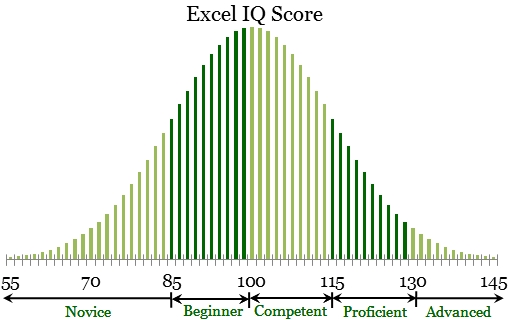
IQ


Driving test score


Often I'm in meetings when we talk about kids, then list numbers associated with that kid.  Do we spend enough time on the qualitative descriptions of students than we do the test scores that they achieve.

What if we started discussing:

Likes/Dislikes


Family History


Home life


Favorite colors/foods/songs/movies


I'm not asking to eliminate ALL data from conversations with students, I'm just asking us to not LEAD with data.  Let's lead with the things that make a student special, unique, individual and real.

I'll be honest and say there is NO, I repeat NO, number I want to define me.  Please don't let numbers define the kids in your schools.

Sunday, June 22, 2014

Stop saying you're busy.

Stop it, just stop it right now.  Eliminate the phrase "I'm Busy," from your mind.

Imagine this.

You're walking down the hallway and someone asks you how you're doing.  You reply without even thinking, "I'm busy."

Stop it.  Stop it right now.

When you say you're busy here's what you're really saying...

I'm working really hard.  I have too much on my plate right now.  I planned poorly and can't stop to talk to you.  I'm prioritizing what I'm going to over building a relationship with you.  I'm also REALLY important and you should think about that when you say "Hi" to me in the hallway.


Imagine this too.

You get a phone call from a colleague/friend asking you if you can do this task to help them out.  You reply, "I could but I'm really busy right now."

When you say you're busy here's what you're really saying...

I poorly planned my own projects or I don't even like you enough to help you out.  I'l help you with your task but I'll reach back out after all of my other work is complete.

Finally, imagine this...

You're on the phone checking you're voicemail and your get one from your grandmother.  She just wants to check in and she says it, "I know you're busy."

When she says you're busy here's what she's really saying...

I haven't heard from you in a while, I miss you, I don't feel like a priority.  


Stop it, Just Stop it. Stop it this instance.

How to combat "Busy"

Saying your busy implies you're misguided, frantic, walking hard, but not towards a goal.  You have a lot to do, we all do.  But you know what successful people do?  They do this:
  1. Set yearly goals in all aspects of their life. (See seeking balance)
  2. Prioritize tasks
When a new "to do" list item is presented.  

Successful people check: 
1.  Does this get me closer to my goals?  If Yes, it goes on the list, if no, it gets omitted/deleted.  NOTE: some things like going to the grocery store or folding laundry do make it on the list of "life maintenance."

2.  How will it get prioritized?  Will it become more important or less important than the tasks that are already there? NOTE:  If the item takes less than 2 minutes to complete, do it now.


When you're doing busy work, you're working on things that are misaligned with your mission.  The items are NOT moving you closer to your professional or personal goals.  Keep focused.

Stop saying you're busy, focus on your goals and work to achieve them.

Resources:


Tuesday, April 1, 2014

Summary of "Remodeling Literacy Learning"

Cross Posted on my work Blog here: http://wgsdsciss.blogspot.com/

Find the original PDF here:  http://www.literacyinlearningexchange.org/remodeling-together


The report started with a survey:
The "NCLE conducted a national survey of educators of all roles, grade levels, and subject areas to find out where we stand as a nation in the following areas:
• What kinds of opportunities have educators had to learn about the new literacy standards?
• What kinds of professional learning are most powerful in supporting teachers as they implement changes in their classrooms?
• How are schools and districts approaching the transition to the new standards, and how involved are teachers in planning and implementing that transition?
• Are teachers working on the change individually or collectively, and how does that impact how well the change is going?
• What role is teacher expertise playing in translating the broad goals of the standards into specific learning experiences for students?"

Page 4 FINDINGS:

PAGE 8 FINDINGS:

pg. 9 "Data from NCLE’s 2013–14 survey demonstrate the potential of the teacher-driven, capacity- based model of educational change. Put simply, the transition to the new standards seems to be going best when teachers are highly engaged in the process and have time to work together to use their professional expertise to bring all students to higher levels of literacy."

pg. 11 "In our 2012 national survey on teacher learning, we asked educators to identify their single most powerful professional learning experience of the past 12 months. The number-one choice by a large margin was “co-planning with colleagues,” cited by 22% of respondents. Coming in second, chosen by 13% of respondents as their single most powerful professional learning experience, was “meeting regularly with a collaborative inquiry group.”"

pg. 11 "Respondents could choose up to three reasons, and the top three all speak to the power of professional collaboration to impact classroom practice:
• Helped me create new lessons, materials, or instructional strategies for immediate use (selected by 59% of respondents as one of the top three reasons the learning was powerful)
• Provided opportunities for active learning, discussion, and reflection on my practice (34%)
• Provided opportunities to collaborate with colleagues/to create a support network (32%)"

pg. 11 "This result is consistent with extensive research showing that educators find professional learning most powerful when it affords them the opportunity to actively exchange ideas with colleagues and test them in their practice immediately."

pg.11 Working with colleagues is GOOD!

p.12 "This year’s data show that over the last year teachers have become even more isolated from each other’s professional expertise, even as they are being asked to undertake the large, complicated task of CCSS implementation."

pg.12 DATA!


pg.12 "Good teaching requires deep understanding of the goals we are trying to help students reach, analysis of their current level of understanding, and careful design of learning experiences, all of which are tasks that require professional time outside of the classroom and are best accomplished with the support of colleagues."

pg. 13 "Beyond being given little time to work through the shifts called for by the standards, most teachers reported having little voice in how their school is making the transition."

pg. 13 GRAPHIC

pg. 15 "Compared to teachers who are working in isolation, teachers who had participated in collaborative work with colleagues around the standards were twice as likely to rate themselves as well prepared to help their students meet the standards and also much more likely to report having already made moderate or significant changes in the content of what they teach and methods of how they teach it in response to CCSS goals."
pg. 16 "Research has consistently demonstrated the value of teacher collaboration in improving student learning,"

p.16 Keys to effective collaboration
"(1) Deprivatizing practice: Teachers open their doors and their briefcases to share lessons, actual teaching, and student work with each other, so they can learn from each other’s successes and, perhaps even more important, failures.
(2) Enacting shared agreements: Colleagues agree at a concrete, specific level on the student outcomes they are working toward and how to assess them.
(3) Creating collaborative culture: Teachers demonstrate accountability to each other by following through on trying new instructional practices between meetings and reporting back on results, and they trust each other enough to engage in hard conversations about what works.
(4) Maintaining an inquiry stance: Experimentation is grounded in evidence and focused on clear student outcomes.
(5) Using evidence effectively: Teachers decide whether a lesson or practice worked and how it could be improved by analyzing evidence from students, from test scores to samples of student work.
(6) Supporting collaboration systemically: Teachers’ shared work receives formal support including protected time, relevant and timely data, and leadership involvement."

pg.18 Teachers need more time
pg. 18 "Looking at practices like lesson study in Japan and periodic curriculum reviews in Finland points to some answers: these are structured, purposeful tasks which immerse teachers deeply in the substance of what they are teaching, the best methods to get concepts across to students, and how best to assess student mastery. Most of all, these structures provide a lab-like setting, an ongoing cycle in which ideas are developed, tested, and refined, tapping the collective insight and practical experience of multiple teachers to strengthen learning for all students."

pg.19 "We then looked at whether teachers who frequently engage in specific collaborative tasks report being better prepared to teach the standards."

pg.19 What works when teachers work together

pg.21 "Professional learning that is embedded in the real work of instruction is far more likely to lead to desired changes. Such tasks let teachers pool their insights and experiences and adjust their practice in real time"

pg. 22 "When asked specifically how big of an impact standards are having so far on classroom practice in terms of both what is taught and how it is taught, solid majorities of teachers across subject areas reported a moderate or significant impact on HOW material is taught. There was more variance in the reported impact on WHAT is taught."

pg. 23 "The most consistent shift reported by teachers in our survey is in spending more time having students defend arguments with evidence, which more than three-fourths of teachers in all subject areas report doing more of this year in response to the CCSS."

pg. 23 "The bottom line is that these standards ask students to work collaboratively and analyze evidence coming from multiple kinds of texts that cross disciplinary lines. This is going to be difficult to pull off if teachers of different subjects remain isolated from each other and so many have minimal to no time to work together."

Recommendations


pg.28 "Recommendation #1: Provide educators with more shared time for planning and professional learning about elevating literacy learning for all students."

pg.29 "Recommendation #2: Encourage and support educators to take initiative in designing and using innovative literacy teaching resources that are appropriate for their students, and not rely on prepackaged programs or solutions."

pg.29 "Recommendation #3: Draw upon the insights, skills, and experience of everyone with a stake in improving literacy learning to help students achieve more."

Pg 29-30 HOW TO:

"Principals and School Leaders Can . . .
• Allocate and protect time for teachers to work together in developing literacy instructional practices and in analyzing student work.
• Provide training, support, and structures that make teacher collaboration time purposeful and effective.
• Build trust among staff by participating in groups not solely as an instructional leader, but also as a collaborative colleague.
• Respect the expertise of teachers in building-level decisions about literacy teaching materials and curriculum and in the application of formative and summative assessment data to instruction.
• Monitor and understand emerging research about literacy learning and educator collaboration, making this a focus for their own professional growth.
• Make literacy learning in every subject a school-wide priority and establish a structure for staff-wide participation in planning and monitoring progress toward the attainment of student literacy growth goals."

"Teachers and Other Educators Can . . .
• Engage in focused, purposeful collaboration with colleagues (both in person and online) about instructional shifts that can be made to deepen student literacy learning in every class.
• Open doors and share practice so that others can learn from both successes and failures.
• Commit to continuous, collaborative assessment and analysis of student work and agree to
shift their strategies as they learn more about students’ progress as literacy learners.
• Demonstrate accountability to each other and to students by developing and documenting
shared plans for deepening student literacy learning across a school year.
• Build professional capacity by choosing literacy teaching strategies and materials based on
learning from collaborative activities with other teachers.
• Tap the literacy expertise that resides in all subject areas and job roles (including coaches,
librarians, and administrators) to build a coherent school-wide literacy experience for students."

Friday, March 14, 2014

Resources for Union R-XI Staff Development

Slides:


Consuming - Phase 1 of Connecting

Subscribe to blogs/websites with a RSS reader, here are two options:


Email Subscriptions via newsletter, options:


Podcasts - For iPhone, iPad, and iTunes, some options:


Lurking - Phase 2 of Connecting

Definition of Lurking: “Lurking is a slang term for when an individual reads a message board without posting or engaging with the community. Lurking is sometimes encouraged by forum moderators as a way for new members to get a sense of the community and etiquette before participating. Lurking also may occur if a user simply wants to get some information without adding to the discussion.” via http://goo.gl/0YOsAi

Actually Connecting - Phase 3

Remember: Jab, Jab, Jab, Right Hook - GIVE, GIVE, GIVE, then Ask.
14 quotes from the book - http://goo.gl/XnmDHU

Twitter - #MoEdchat 9pm Thursdays

Maximizing your PLN document - http://goo.gl/rdbTr
Complete exhaustive list of hashtags - http://goo.gl/YPElr
When is a twitter chat happening - http://goo.gl/xTkQt
Twitter 101 - http://goo.gl/VORdQ

Facebook

edReach.us - http://goo.gl/55wDZ

Other Connected Sites

Educators PLN - http://goo.gl/DkAB
Flipped Learning Network - http://goo.gl/XaH8U
Kagan discussion board - http://goo.gl/RfZOH9

Google Plus

Beginners Guide - http://goo.gl/x090dk
LiveBinder for educators - http://goo.gl/wYFYFV
Tips for teachers - http://goo.gl/OvNZm

Communities
  • Connected Classrooms
  • Digital Leadership
  • EdReach
  • Edcamp
  • Educational Leadership
  • Minecraft in Education
  • Google docs and drive
  • Google Apps
  • Connected Learning
  • Discovery Education
  • EdcampSTL

Pinterest

How to use it for educators - http://goo.gl/hrIH4
Tips for teachers - http://goo.gl/wjx1p7
Using for education - http://goo.gl/ZVpg1T

Events - for a little Face-to-Face (F2F)

3/29 ShareFair - http://goo.gl/z90ZRF

Things I'm excited about trying


Who are the 5 people that do your job better than you? Connect with them.

Monday, August 27, 2012

Art and Science of Teaching: Chapter 8

Our district is investigating The Art and Science of Teaching by Robert Marzano (@robertjmarzano).  


Disconnected empathy.  That is the essential learning with this chapter.

While reading this chapter I kept thinking how much I take teaching personally.  It's my craft, it's my passion, but the chapter kept reminding me to disconnect and not take so much personally.

Here are my takeaways:


  • The quality of relationships is key to student learning
  • Everything comes back to "guidance and control"
  • How much are you as a teacher committed to the well-being of ALL participants
  • "We are a team here and succeed and fail as a team.  Additionally I have stake personally in the success of each one of you."
  • Be consistent
  • My biggest weakness is "The causes of many behaviors labeled and punished as rule infractions are, in fact, problems of students and teachers relating to one another."
  • Teachers need to be "considerate, buoyant, and patient."
  • Show the appropriate amount of dominance and cooperation
  • Have emotional objectivity
  • Brophy and Everston (1976) state: "professional view of their students looking upon them primarily as young learners with whom the interacted within the student-teacher relationship  elicited the highest result of student learning.
  • Classroom needs a sense of community
  • A teachers actions as well as their works are "listened" to by the students.
  • Teacher Enthusiasm is key
  • Use humor....when appropriate...
  • Action Steps for your classroom:
    1. Know something about each student, invest in them, get to know everything you can.
    2. Engage in student activities, go to their events, care about them and their families.
    3. Talk to every student every day, or as many as you can.
    4. Personalize learning (Blog posts on this one are plentiful: 1, 2, 3 )
    5. Smile, care, engage, interact, be interested...
    6. Use humor....when appropriate...
    7. Enforce both positive and negative consequence (this one I still struggle with) 
      1. Acknowledge when students follow the rules instead of just when they don't
    8. Practice removing yourself from the situation
      1. Listen, you are not going to love every kid.  Use a consistent tone.  Give them the benefit of the doubt.  What could have possibly make them act the way they did.  Reason with them, support them, it's not personal.

Friday, August 10, 2012

Communicating the "why"

I'm starting a new position in a new district as the Science and Social Studies Curriculum Coordinator.

This is VERY exciting!  Also very stressful.  (see my post on my complexion)

One thing I'm struggling with understanding is the "why" behind what we do.  I'm wondering if we communicate that enough.

We start every year with good intentions and lofty goals.  Do we ever communicate why we made those goals?  Often not.

I am working hard this year to not only put together a seamless plan but also communicate the why and how we will move.  I'm very focused on communicating not only the what, the how, but most importantly the WHY.  Also determining how we will know we've arrived....

Below I posted my WORKING DRAFT!  of our work this year.  Please feel free to give feedback and offer support.  I would also love to connect with other people doing this same work so don't be afraid to find me on twitter (cmcgee200 or wgsdsciss


Working Draft of Mission/Vision - The Why...

Mission:
The mission of the Science and Social Studies Curriculum is to instill in each student a passion for learning and the skills to solve global issues.  This will be accomplished by creating systems that meet the unique needs of each student through high expectations, innovative strategies, and partnerships with parents/community while increasing teacher engagement within the content.

Questions:
Determine common storage availability Server? Workgroup?

Assessment:
1.  MAP/EOC data as rated by dese
2.  Local summative assessment data (Quarterly) as rated by educators
3.  Ability for teachers to accurately personalize instruction (differentiation) as rated by survey
4.  Comfort of teaching Sci/SS as rated by teacher survey

Action Plan:
Phase 1: AST (Art and Science of Teaching) Chapter 1, 6, 10
Write curriculum map of content/skill
Write Learning goals referencing CCSS/GLE
Build database of activities/choices
Build database of Youtube videos, DVDs, United Streaming, websites
- THROUGH “LET” document


Phase 2:
Identify our essential vocabulary K-12
Identify essential questions
How will we track student progress
connect goals to GLE, SMS, and CCSS through highlighting/dotting

Phase 3: AST Chapter 2, 3
Determine scoring guide for goals
Determine activities by goal

Step 4: AST chapter 4
Write Assessment and scoring guide
Determine how report data/performance
Item analysis
Goal analysis

Phase 5: AST Chapter 10
revise/review how to grade assessment
Connect vertical alignment of concepts

Phase 6: AST Chapter 1, 3, 5, 9
How will we know if they “get it” (revise scoring guide?) (exemplars)
How are we tracking progress? Can we improve that?
What is effective feedback?
improve report results

Phase 7: AST Chapter 9
How to Pre-Assess knowledge and differentiate experiences
Reevaluate key vocabulary
Determine Anchor activities/projects/experiences
How are we giving feedback?

Phase 8: AST Chapter 6
Discuss and investigate grading practices
Discuss plan and proposition for revising grading resources
Discuss personalized learning
Improving Feedback

Phase 9:
Revise and improve


Factors impacting our progress
1.  Numbers on team
2.  Commitment to goal
3.  Fi/T = momentum (F=focus, i=intensity OVER time)
4.  ?????


Presentation Ideas:
About me
This i Believe = Tom Cruise
Hope = having something new to try and being willing to try it


Wednesday, August 8, 2012

Art and Science of Teaching: Chapter 1

Our district is investigating The Art and Science of Teaching by Robert Marzano (@robertjmarzano).  

I originally read this book in 2008.  I loved it.  I fell in love and used it to catapult my craft of teaching for the last five years.  Since taking a new job in a new district I have started over in more ways than one.

I'm going to use these spaces to post my largest takeaways from each section.  Enjoy, challenge me, question, use this to move yourself forward.  I'm excited for this new endeavor.

Here goes:

Introduction:

  • Schools have little impact on student achievement that is independent of their background and SES.
  • Better teachers yield better results from students
  • "Mathematical models are false" there are patterns but no certainties
  • No matter the strategy there is no silver bullet that works for every student
  • Effective teaching is 1-part knowing your students and 1-part knowing how to teach

Chapter 1:
  • "Set goals, track progress, celebrate success"
  • "Goal setting has a general tendency to enhance learning"
  • Feedback is as important as goal setting
  • Celebrating effort is as important as progress or product
  • Capitalizing on student interest has a positive effect on student motivation
  • "A learning goal is a statement of what students will know or be able to do."
  • Two kinds of learning:
    • "declarative learning: informational in nature"
    • "procedural learning: Strategies, skills, and processes"
  • After a learning goal, write a rubric.
  • Have students write what they know, want to know so you can wrap up with what they learned in a unit. (KWL strategy)
  • Even though teachers make a rubric, let students make their own student friendly version.
  • Challenge students to track their own progress and take charge of their own learning.


GTA a no :-(

Well, today I got the bad news.  I was not selected to attend the Google Teacher Academy this year in New York.

Here is the email I received:


It would have been great to get some feedback or advice moving forward but none was given.  I'm not sure how to proceed.  I am SURE I will apply again when it becomes available next time.

See my application here

Wednesday, January 4, 2012

Countdown to Edcamp

Interviewer: Where have you been why have you not been posting?


Me: Well you see, I've been doing a few things here and there.  Mostly innovating my classroom with flip teaching, standards-based grading and personalized learning plans. Oh, and I'm helping to organize a little thing called EdcampSTL.


Interviewer: What is EdcampSTL?


The edcamp concept is based on the unconference format where the participants drive the learning based on their passions and interests throughout the day. Upon arrival, each of you will be able to sign up to facilitate a session of your choosing or choose to be a participant in a session. There will be ten choices for each of the four sessions, and if at any time, you want to start a new conversation, it is just a matter of finding a few chairs, a few friends, and the learning begins again.  Undoubtedly, you will leave the day with new knowledge, new connections, and new energy about the possibility of educational innovation. We will start at 8 a.m. and finish before 4 p.m. The idea is fast and furious learning with an expanded learning network.


Interviewer: Sounds easy, How hard could that be?  You mean, you don't organize any of the speakers or anything?


Me: No.  It's all grassroots, so I just help provide the forum.


Interviewer: Man. So, basically you just open the doors, hope people show up, and that's it.


Me: There's a lot more to it than that.  In fact, I'm working off this list right now....


A month before Edcamp
  • Follow up with building principal
  • Follow up with donations
  • Create work order for tables and chairs, go through details with head custodian
  • Create training opportunity for student council representatives to act as greeter/ushers
  • Ensure building access and alarm codes


A week before Edcamp

  • Organize donations
  • Copy map of building
  • E-mail staff regarding the use of the building and their rooms
  • Make signs for Wi-Fi passwords and instructions
  • Make signs for rooms presentation/collaboration (USE SPONSOR LOGOS)
  • Find these supplies
    • Dry erase markers for every room
    • Post-it notes for student center (is this for the board?)
    • Extension cords for every room
    • Powerstrips for every room
    • Table cloths?
    • Name tags for tweetup, event, happy hour
    • Sharpies
  • Who do I call if there is a WIFI Emergency? _________________________________
  • Who do I call if there is a Fire Emergency? pull the alarm
  • Who do I call if there is a Medical Emergency? 911
  • Who do I call if there’s a custodial Emergency? ________________________________
  • Who do I call if there is an Emergency? _________________________________
  • Start gDoc with everyone’s name/ school/email/twitter, etc
  • Ensure heating work order went through
  • Make sure “Things You Can't Do in School With Kids in the Building” activity is set up
    • Determine activities
    • Determine materials
      • 8 markers
      • 8 people needed
    • Determine spaces
    • Make signage
  • Who’s running check in? _________________________________
  • Who’s setting up breakfast? __________________________________
  • Who’s cleaning up breakfast? __________________________________
  • Who’s running LATE check in? _________________________________
  • Who’s setting up lunch? __________________________________
  • Who’s cleaning up lunch? __________________________________
  • Acquire projector and laptop for tweets
  • Write welcome talking points
    • Sponsors
    • Signage
    • Wifi
    • phone numbers
    • from the rooms
    • Presentation rooms
    • Gathering rooms
    • leave the school better than you found it
  • Find out how to work the intercom
  • Make box for FORMS: Things You Can't Do in School With Kids in the Building

The night before Edcamp
  • GET THE MASTER KEY
  • Make boards for entrance and directions and set it up
  • Check Wi-Fi
  • Get microphones for N.Gym
  • Have signs up for Wi-Fi passwords and instructions
  • Mark rooms with signs that will hold sessions
  • Walk through and check out the technology hook ups, projectors, etc.
  • Set up post it board
  • Set up projector and white wall
  • Coolers? Ice?**
  • Ensure spaces have supplied we need
    • Dry erase markers
    • Post-it notes
    • Extension cords
    • Powerstrips
    • Table cloths?
    • Name tags
  • Create post edcamp survey...possible question include
    • What did you think of the physical location?
    • What did you think of the date of the event?
    • What did you think of the length of the sessions?
    • How did you first hear about this EdCamp?
    • Do you have any suggestions for publicizing the event next year?
    • What was your favorite part about the day?
    • What do you think could be improved upon for next year?
    • Would you be interested in being on the organizing committee for next year’s EdCamp?
  • Bring sharpies and name tags to TWEET-UP
  • Ensure breakfast room set up
  • Ensure welcome table is set up
    • make sure there are enough name tags and sharpies
    • Print check off sheet from MLP and eventbrite
  • Set up electronic sign outside of building.
  • Take a before picture of every room.

Morning of edcamp
  • Check list with names or Eventbrite Ipad/iphone App
  • Ice down drinks
  • ASSIGN Greeters
  • Check Wifi

During Edcamp
  • Who’s running check in? _________________________________
  • Who’s setting up breakfast? __________________________________
  • Who’s cleaning up breakfast? __________________________________
  • Who’s running LATE check in? _________________________________
  • Who’s setting up lunch? __________________________________
  • Who’s cleaning up lunch? __________________________________
  • Take lots of pictures
  • update wiki often
  • ensure a record of the days events OUTSIDE of twitter
  • Who/Where will collect “Things You Can't Do in School With Kids in the Building” FORMS for prizes
  • Set up table in gym with giveaways and prizes

After Edcamp
  • Empty trash in every room
  • Shut down computers in every room
  • Room set up okay?
  • take down all signage
  • Send follow-up thank you e-mail
  • Send e-mail thank you to all sponsors.
  • write a post event report
  • compile all resources by going through twitter stream
  • Send out survey
Interviewer: Oh, so you are busy.

Me: Oh, and I graduated with my doctorate. So, yea, a little busy, but I have great help.... Are you coming to EdcampSTL?

Interviewer: I am now.

Me: See you there!

2/11/12