Showing posts with label edchat. Show all posts

Thursday, April 7, 2016

The importance of ketchup when building a team

I recently was listening to one of my favorite podcasts “Reply All.”  listen here:


They were interviewing Scott Page (TIME: 22:29), a professor of complex systems at the University of Michigan and an external faculty member at the Santa Fe Institute.  And his connection between the lowly condiment and building a team struck me!



"SCOTT: Now turns out if you’re British or if you’re African American from the South, not as a rule but generally speaking, you’re likely to keep your ketchup in the cupboard. If you’re not British and you’re not African American from the South, you tend to keep your ketchup in the fridge. And you could think “Vive le difference, who cares, right?” Well it actually does matter because suppose you run out of ketchup. If you’re out of ketchup and you’re a ketchup in the fridge person, what are you gonna use? Well you might use mayonnaise, you might use mustard because those are things you think of when what’s next to the ketchup. If, alternatively, you’re a ketchup in the cupboard person and you run out ketchup, what’s next to the ketchup in the cupboard? Well, malt vinegar.


GOLDMAN: So, the more diverse the backgrounds, the more associations you get, and the more paths towards solving a hard problem.


And there are actually a lot of real-life examples of this. Carl Zimmer, a science writer for the New York Times, he says that the ketchup story completely tracks with what he sees in the science world


CARL ZIMMER: You know if a scientist is looking at a problem and thinking about how am I going to solve it, there’s a range of approaches that they may think of just based on their training. You know, and they can’t even imagine that there’s another way of approaching it. You know, they can’t imagine that there’s ketchup in the pantry, really. And the fact is that another scientist can walk in and be like,“Oh, look, you’re looking at this totally the wrong way.”

That’s it!  The importance of building a great team is being able to understand where you keep the ketchup.


In all the profiling tools I’ve used, Strengthsfinder, Gallup, Myers-Briggs, Kolbe index, etc.  All of these tell me about who I am and how I work.  The importance of building a team is taking time to ask these kinds of questions, uncover the way we think and work and then build the best, most diverse, team possible.


So, the next time you’re building a team, pass the ketchup!


Do you want more innovation at your school, business or team? Focus on diversity!


Monday, August 27, 2012

Art and Science of Teaching: Chapter 8

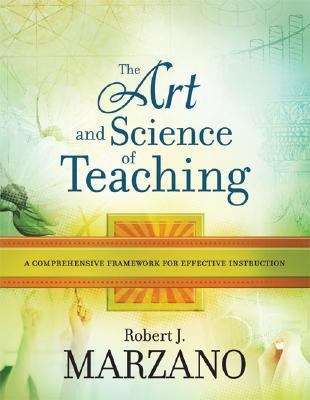
Our district is investigating The Art and Science of Teaching by Robert Marzano (@robertjmarzano).  


Disconnected empathy.  That is the essential learning with this chapter.

While reading this chapter I kept thinking how much I take teaching personally.  It's my craft, it's my passion, but the chapter kept reminding me to disconnect and not take so much personally.

Here are my takeaways:


  • The quality of relationships is key to student learning
  • Everything comes back to "guidance and control"
  • How much are you as a teacher committed to the well-being of ALL participants
  • "We are a team here and succeed and fail as a team.  Additionally I have stake personally in the success of each one of you."
  • Be consistent
  • My biggest weakness is "The causes of many behaviors labeled and punished as rule infractions are, in fact, problems of students and teachers relating to one another."
  • Teachers need to be "considerate, buoyant, and patient."
  • Show the appropriate amount of dominance and cooperation
  • Have emotional objectivity
  • Brophy and Everston (1976) state: "professional view of their students looking upon them primarily as young learners with whom the interacted within the student-teacher relationship  elicited the highest result of student learning.
  • Classroom needs a sense of community
  • A teachers actions as well as their works are "listened" to by the students.
  • Teacher Enthusiasm is key
  • Use humor....when appropriate...
  • Action Steps for your classroom:
    1. Know something about each student, invest in them, get to know everything you can.
    2. Engage in student activities, go to their events, care about them and their families.
    3. Talk to every student every day, or as many as you can.
    4. Personalize learning (Blog posts on this one are plentiful: 1, 2, 3 )
    5. Smile, care, engage, interact, be interested...
    6. Use humor....when appropriate...
    7. Enforce both positive and negative consequence (this one I still struggle with) 
      1. Acknowledge when students follow the rules instead of just when they don't
    8. Practice removing yourself from the situation
      1. Listen, you are not going to love every kid.  Use a consistent tone.  Give them the benefit of the doubt.  What could have possibly make them act the way they did.  Reason with them, support them, it's not personal.

Wednesday, August 8, 2012

Art and Science of Teaching: Chapter 1

Our district is investigating The Art and Science of Teaching by Robert Marzano (@robertjmarzano).  

I originally read this book in 2008.  I loved it.  I fell in love and used it to catapult my craft of teaching for the last five years.  Since taking a new job in a new district I have started over in more ways than one.

I'm going to use these spaces to post my largest takeaways from each section.  Enjoy, challenge me, question, use this to move yourself forward.  I'm excited for this new endeavor.

Here goes:

Introduction:

  • Schools have little impact on student achievement that is independent of their background and SES.
  • Better teachers yield better results from students
  • "Mathematical models are false" there are patterns but no certainties
  • No matter the strategy there is no silver bullet that works for every student
  • Effective teaching is 1-part knowing your students and 1-part knowing how to teach

Chapter 1:
  • "Set goals, track progress, celebrate success"
  • "Goal setting has a general tendency to enhance learning"
  • Feedback is as important as goal setting
  • Celebrating effort is as important as progress or product
  • Capitalizing on student interest has a positive effect on student motivation
  • "A learning goal is a statement of what students will know or be able to do."
  • Two kinds of learning:
    • "declarative learning: informational in nature"
    • "procedural learning: Strategies, skills, and processes"
  • After a learning goal, write a rubric.
  • Have students write what they know, want to know so you can wrap up with what they learned in a unit. (KWL strategy)
  • Even though teachers make a rubric, let students make their own student friendly version.
  • Challenge students to track their own progress and take charge of their own learning.


Friday, September 2, 2011

Tom Cruise Solves America's Education Problems


I was inspired to write this post by two scenarios yesterday.  The first was by Angela Maiers.  Her Tedx talk (posted below) on mattering and how much we matter to one another reminded me what's important in education.  Another is by stumbling upon the website/podcast/book/cultural phenomenon "This I Believe..."


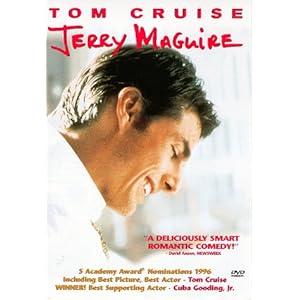
Jerry Maguire is a movie starring Tom Cruise as a powerful sports agent living the american dream.  Tom Cruise’s character is traditionally flawed and quickly into the movie he comes to a brilliant realization.  He, after some bad takeout, begins to write his mission statement.  In his mission statement he states that the key to being a successful agent is smaller numbers of clients and personal attention.  For this he was fired from his job, loses all of the success, loses his fiance, loses everything.  At one point he even describes himself as “cloaked in failure.”  By the end of the movie the hero’s resolution is that Tom Cruise’s character realises he doesn’t need the fame, the wealth, and the American dream, his character realizes the American dream lies in how much you matter to another person.  Tom Cruise’s character goes through many trials and tribulations to recognize this fact before he utters the now famous phrase: “You complete me.”  He gets married and as the end of the movie eludes, he begins to build a new business focused on mattering to the client and personal attention.


Education to me is much like Jerry Maguire.  Jerry, like education, is too big as an industry.  Class sizes are too large.  Most politicians and textbook companies are all about "showing them the money." Teachers are produced as if from factories.  Teachers are trained in the art of strategy, standards, and teaching to the middle of the class.  Differentiation is a ploy that is well said and well described but near impossible in rooms of 30.  Teachers make way too much money, oops, sorry wrong industry.  Teachers are too powerful as professionals, oops, sorry again.  Education is focused on as many initiatives as possible to say that our school is doing it all while solving nothing.  Education is the power agent, the sports agent out for itself.  Education is currently “cloaked in failure.”

I believe that the key to education reform, the key to solving the nations education problems is just the mission statement described by Jerry Maguire.  Smaller class sizes, in fact no classes.  Instead of teachers, we apply for the roles of mentor or steward.  We inspire, educate, cultivate, challenge, support, love, play-alongside, and genuinely care for our students.  Yes, we can like them, and then send them home when the bell rings, go back to our own house and our problems and live out our lives, but that doesn't mean we are truly focused on their success.  We seldom put the thought of how much we impact the lives of others into the forefront of out minds.  I believe the key to a successful school, a successful classroom and a successful education system is not standardization, assessments, and due dates.  It’s how much we care about the person in front of us, beside us, around us.  I beleive the key to education is personal attention.

How could we not want to provide personal attention and caring for such a cute face like this! This is our future!


If you are willing, I challenge you to write what you believe about education on your blog, post it to twitter and use the hashtag #thisibeleive.


Thursday, May 19, 2011

Dive into the data - Analyzing Assessment Data

Every unit I give formative assessments that drive my instruction.  I alter lessons plans, reteach and reassess as needed and seek to, through effective feedback and standards-based grading, help students succeed.

This got me to thinking.....

How do you analyze test data?  

Whether it is a quiz, a summative exam, a project?  What do you do at the end of the quarter, unit, project, etc. to wrap up and dive into the data?

Here's what I do at the end of every unit: https://docs.google.com/viewer?a=v&pid=explorer&chrome=true&srcid=0Bwz1J6fj2c9rY2E1ZThlNGQtODZiMy00MDk2LWE3ZTYtZGU2ZTg0M2MyMzIy&hl=en_US&authkey=CL2rnegD

No one asks me to do it but I am able to gain valuable information about what worked and what didn't.  I know this is like performing a rather detailed autopsy of something that already happened and something I can do nothing about, but it changes my behavior for the next time I complete this unit.

What are your thoughts?  What do you do?  What data do you dive into?

Monday, March 14, 2011

Top 100, WOW!

WOW!

Special thanks to online degrees for considering and listing my blog for the Top 100.  I am truly grateful and honored to be listed.

Some of who I consider to be the best of the best are on this list.  I am humbled to be in their company.

Please take time to check out the list, add some of them to your reader, you will not be disappointed.

Please pay special attention to @justintarte (Herr tarte), @thenerdyteacher (The Nerdy Teacher), @JPPrez (Bits and Bytes), and @stumpteacher (Stump the Teacher) the coolest Jedi I know.  You will not be disappointed!

ADDENDUM:

Due to recent discussion and blog posts my links and recognition to this list has been removed.  Although the list is comprehensive, the people who put in the time and effort to create and publish the list are just doing their job, I, and many others feel that the motives are less than pure.

I am happy and grateful to be considered.  I am happy to be on the list, the list has brought new people to my blog and a new platform to share with great educators out there.  Thank you to all who support me in the endeavor of collaborating.  I hope that we can find a way to recognize great educators for doing great work and keep the motivation pure.

Until the next time we colaborate....

Wednesday, December 22, 2010

What is Excellence?


I ran across this today on a conversation about perfection and it really hit me.  I have a feeling this will result in a more thorough blog post but I felt it timely to just be read as is:

Excellence is willing to be wrong. Perfection is being right.


Excellence is risk. Perfection is fear.


Excellence is powerful. Perfection is anger and frustration.


Excellence is spontaneous. Perfection is control.


Excellence is accepting. Perfection is judgment.


Excellence is giving. Perfection is taking.


Excellence is confidence. Perfection is doubt.


Excellence is flowing. Perfection is pressure.


Excellence is journey. Perfection is destination.

Is it better to be excellent or perfect?  I feel I am striving for perfection, when I should be focusing on excellence.


I needed this right now...