Tuesday, February 5, 2013

Never Work Harder Than Your Students: Chapter 4

We are reading the book: Never Work Harder Than Your Students with our 2nd and 3rd year teachers as they come into our district.  Here are some of my main takeaways from the chapter:


  • Supporting students means thinking differently about misconceptions during your lesson planning.

  • Develop interventions before students fail
  • What if we provided the net below the tightrope instead of being right when they fall?

What if we prevented failure instead of predicted it?

  • Proactive support is merely matching your teaching style to students' learning styles
  • We all have the belief that ALL of our students can achieve given the right conditions.

MATH SECTION:

Specifying what students MUST know - what they already know = What we need to teach

Intervention Plan:

  1. Plan in place before a student fails.  The plan is communicated to students, parents, and posted.
  2. Plan has a red flag mechanism, something that sets the ball in motion.
  3. Plan has steps that are immediate results of the red flag.  IF_______ THEN _______
  4. Plan has roles and responsibilities for both the teacher and the student.

I'm Confused....


  • Take steps to clear up confusion before it begins
  • We know which problems they are going to get wrong, but we let them anyway.
  • When students are confused it may not be for reasons we think. Listen first.
  • When you run into trouble have:
    1. A range of explanatory options for students
    2. A thorough understanding of your content

ASIDE: Discovered in the chapter:

Demystify The Process!

  • We tell students to study but don't teach them how to study.
  • Make the process as explicit as possible
  • Clearly explain the purpose of each assignment or activity, if you can't maybe you shouldn't be doing it!
  • Provide all the necessary steps in written directions
  • It's not "DUMBING IT DOWN" it's ensuring success.
  • It's unrealistic to think students can act like experts as soon as they are introduced to new material.

Remove Supports SLOWLY!

  • Tell students it's a support and that you will remove it when they are ready
  • Don't change the learning task, change the supports to get students there.
  • Don't change the task, change students' role in relationship to the task.

SUPPORT:

  1. Identify what support is intended to do, so you know when to remove it
  2. Look for ways to ween students off of the support
  3. Allow room for struggle

Interventions are for BOTH sides of the triangle:

  • Often we use programs like Response To Intervention for students struggling to meet the expectation.
  • We miss the opportunity to intervene with students who already "get" our material.
  • Both groups, high and low, need support and interventions to ensure success.


Wednesday, January 30, 2013

How's Your Balance?

I love Podcasts.  I'm addicted.  There is no better way for me to stay current, stay thinking, stay connected in the time I have.

One of my favorites is the Entre Leadership Podcast.  Subscriber here: https://itunes.apple.com/us/podcast/the-entreleadership-podcast/id435836905


Recently one of the podcasts, hosted by Chris Locurto, mentioned Zig Ziglar's Wheel of life:
This prompted me to challenge myself with a New Year's resolution to seek greater balance.  

I started the year by printing the wheel and coloring in where I spent the majority of my time this past year.  I basically came clean to myself about where I placed my priorities.

I posted this on the wall of my office and set myself a reoccurring task that simple asks the question, How's Your Balance?

I'll come back to this post at the end of the year and answer the question with a new graph, being completely honest and hoping to see I may not have reach total balance but I've made progress.

So I challenge you to print the wheel, ask yourself (BE HONEST), and seek greater balance.

Find more on Entre Leadership here: http://www.entreleadership.com/home/

Wednesday, December 26, 2012

Revolutionizing Education through NPR

Over break I'm taking some time to Build capacity.  To find ways to plant seeds of ideas so that when I return to the educational system I can find ways to improve our systems.


I had a chance to listen to the TED Radio hour.  This is a new show on NPR that takes a TED talk and combines it with dialog and conversation.

This radio show with Sir Ken Robinson is where he gets a chance to expand on his famous TED talk on how Schools are killing creativity.  Awesome stuff!


Sunday, December 16, 2012

What am I to do?

In the wake of the Newtown shootings I've been in a state of unrest.  Much like the rest of the educators in the world I'm sure.  

Today's homily at my church (link coming soon) gave me focus.  The topic being, "What is mine to do?"

In light of the recent upheaval I feel it's time to think, reflect and refocus.  What am I to do in light of such a horrific tragedy?

I am to:

  • cherish every moment with ever student. Especially the tough moments.

  • care deeply about ever student. Go beyond the surface.

  • provide the best opportunity, using the talents I am given, to learn, grow, and share.

  • provide safety and security at all times.

  • provide a shoulder to lean on when a student or colleague needs it.

  • leave every day having done everything I can for every person I meet.

  • meet every day with a "YES!" and provide that same answer when asked if I can help.

  • build strong relationships with students.

  • build strong relationships with parents.

  • realize the curriculum is important, but more important is the time I spend with each of my students and colleagues.

  • ensure that my classroom is a place where teachers/students can take risks, learn from mistakes, and develop their passion.

  • share my passion with my students and colleagues.

  • approach life with love, everyday.


Monday, December 10, 2012

Check Yo'Self Before You Wreck Yourself!

Our district is continuing it's look at Marzano's Art and Science of Teaching.  This post is a look at Chapter 7 entitled:  What will I do to recognize and acknowledge adherence and lack of adherence to classroom rules and procedures?

The more schools I walk through the more I see "respect," "honesty," and "perseverance" posters and hallways.  I always laugh at these posters simply because what do they really do?  Do students look at them and think: "You know what, I was going to give up, but now that I saw that poster.  I'm going to try my best."  No, that never happens.  The posters the PBIS programs, all those things don't mean near as much as effective classroom management and supervision.

All of the suggestions given in Marzano's chapter 7 depend on one thing.  They depend on the teacher's ability to build strong, lasting relationships with students.  If students know you care about them, then the following strategies will work for your room.  If you don't care about them, none of these will work.

The BEST thing in this chapter is the very last action step:

Design an Overall Plan for Disciplinary Problems.

This action step asks teachers to design a predetermined plan for how you will deal with typical classroom behaviors, both when there is a disruption and when every things goes as planned.  WHat will you do?!

Plan for it, as the saying goes:
"If you fail to plan, then you are planning to fail."

Here are the rest of the takeaways from the chapter:


  • Students adherence to classroom rules should be recognized and acknowledged
  • Reinforcement - straight positive consequences
  • Punishment - negative consequences
  • no immediate consequences - as it says
  • punishment and reinforcement - combination of consequences both positive and negative
  • Data shows that interventions reduce disruptive behavior work in public schools
  • Teachers should seek a healthy balance in rewards and punishment
  • Don't reward people for doing the things they are suppose to do
  • Don't let students focus on the reward
  • Rewards and punishment should BOTH enhance student learning.
  • Token economies are a way to rate and reward positive behavior
  • Teacher reaction can be an intervention
  • "Withitness" is used to describe the teacher that knows what's happening in ALL parts of the room.
  • Notes to Parents that can include email or phone calls work to celebrate success and to redirect poor behavior
  • Drastic situations and interventions can include a teacher and parent conversation.  
    • Consider taking it to their house at night.  
    • That'll redirect the behavior or give you, the teacher, a better perspective on why a behavior is happening.
  • Tangible recognition is any recognition of student adherence to rules and procedures
  • Color coding behavior is typical in elementary schools.  Use a card on the desk to note student performance.
  • Be Proactive - know if something is going on and head situations off before they happen
  • Occupy the Room - Walk around, make eye contact, get to every student, every day!
  • Notice potential problems - Like being proactive, head them off before they happen.
  • Use a series of gradual actions
    • Notice the problem
    • Look at the students
    • Move closer
    • speak directly to/at them
  • Use group contingency - "We're all in this together"
  • Recognize when a student is out of control
    • Step back
    • Calm yourself
    • Listen actively
    • Calm student
    • Repeat simple requests
    • isolate the student from the room

Friday, November 30, 2012

WAR, What is it good for? Absolutely EVERYTHING?

W.A.R. in baseball stands for "Wins above replacement."  It's a baseball statistic described by wikipedia as: 

Wins Above Replacement, commonly known as WAR, is a non-standardized sabermetric baseball statistic that is used to show how many more wins a player would give a team as opposed to a "replacement level", or minor league/bench player at that position.  
From http://en.wikipedia.org/wiki/Wins_above_replacement


Edwin Star believes has his own belief about War.  He asks "War, what is it good for?"  
He claims "Absolutely nothing."


I could not disagree more!

When we think of WAR, wins above replacement this makes me think of education.  Wins above replacement (a sub).  When I walk into a class are you providing a learning experience unlike any other.  What is your WAR?

When I first started teaching I always strived for a classroom that "ran itself."  When I work with teachers and talk about "flipteaching"  teachers always ask "Well, what will they need me for then?"  


If you think a video can replace you, then it should!

The environment you provide, the relationship you create with a student, the desire to learn you grow, collaborating and connecting with students families and the community impact your WAR.

When you think about what you provide every day for students.  Are you providing an environment, an experience, a lesson that is statistically better than a replacement could give?  What added benefits are you bringing to the table?  

Challenge yourself every day in your school to provide a unique opportunity that is special.  Build lasting, compassionate relationships with students and families.  Ensure that your connection and experience you provide is without replacement.

They always say:


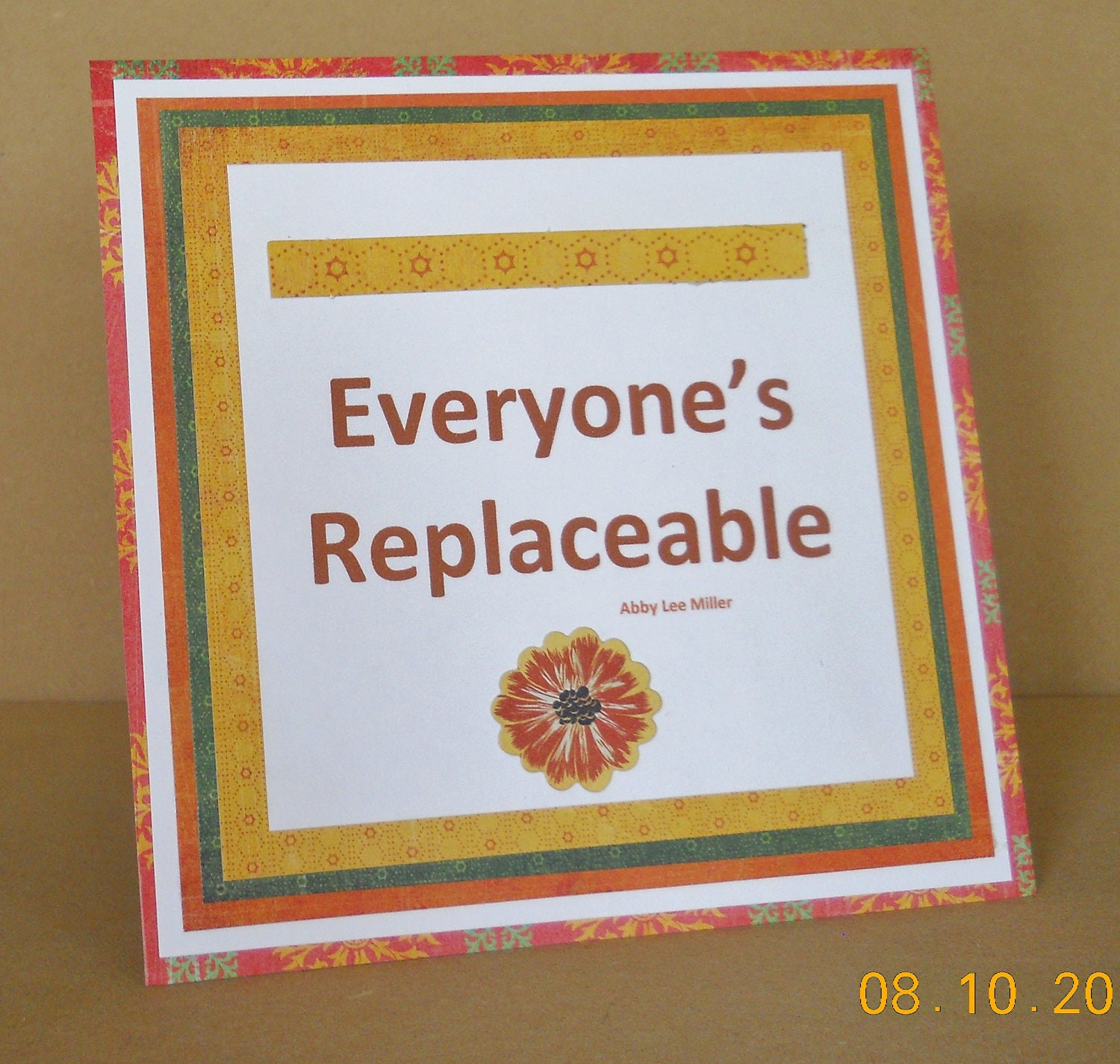
That may be true for the next warm body to fill the space.  But I guarantee their WAR won't be as high as mine.

So you ask, "WAR, good God y'all, What is it good for?"  Possibly EVERYTHING?!

Mad props to @mrsenorhill, @ideaguy42, @ahintofcinnamon, and @desertdiver for the idea for this post.

Tuesday, November 20, 2012

What is the next chapter for edcuation?

Today I had the opportunity to watch Bill Rankin's discussion on the next page of education:


My takeaways:


Amazing technological changes don't do a thing to culture.
  • The problem with education is us...
  • "We use to do it this way, now we'll do it a slightly different way..."
  • We've seen the enemy and it is us.  
  • I want to see my students learn more, then in-turn don't I need to learn more?
  • Letting other people move ahead gives us an excuse to not to.

We cannot focus on the technology without focusing on the culture.

  • It's time for everyone to be involved.
  • All contributions are important.
  • New technologies allow us to localize education.

SHIFT in education must move the students to the center:

  • Customizing education to fit YOUR needs.
  • Getting the tool "I" need means we cannot have a one-size-fits-all solution.
  • When will we realize we are teachers first and content specialists second?
Engagement

  • How are we ALL connected?  Why aren't we capitalizing on it?
  • Increasing anytime and anywhere learning.
  • How long until the tools become invisible?
  • The days with the single teacher in front of the class with the book has passed.
  • Teachers are becoming CO-LEARNERS.
  • How can kids get prepared outside of class to go in-depth inside of class.
  • Every child needs to have THEIR OWN personal device.
We are at the beginning of the SHIFT to ubiquity of access.  

  • We are heading to a mobile environment.
  • Kids are significantly ahead of us as teachers. (we often get in their way)
  • Kids have games and life apps on their mobile device.  We are missing the opportunity to design GREAT apps to engage students in learning.
Instead of letting technology influence the classroom, let's think about what we want our classroom to look like.  

  • Keep the outcomes in mind!
  • Technology is focused and supportive to the goal.
  • Funding is an issue.  You've got to "bring your own."
  • Assessments need to be embedded.
WOW! as we continue to discuss curating our own textbook.  I continue to wonder.....

  • Will a Digital resource or really anything technology related change the culture?
  • How do you change the culture of education in your building or district?
  • How can we SHIFT the focus from the teacher to the learner?