Showing posts with label grading. Show all posts

Thursday, December 1, 2011

Personalized Learning for Every Student - What I'm learning...

I'm learning a TON about personalizing learning for every student as my classroom begins to be more and more personalized for each student's individual needs, interests and readiness.


Where I'm working from:

  • Utilizing backwards design,
  • Having rubrics for each objective,
  • Understanding differentiation,
  • Understanding growth mindset (more on that later),
  • In a standards-based graded classroom,
  • In 6th grade science.


What I'm learning:
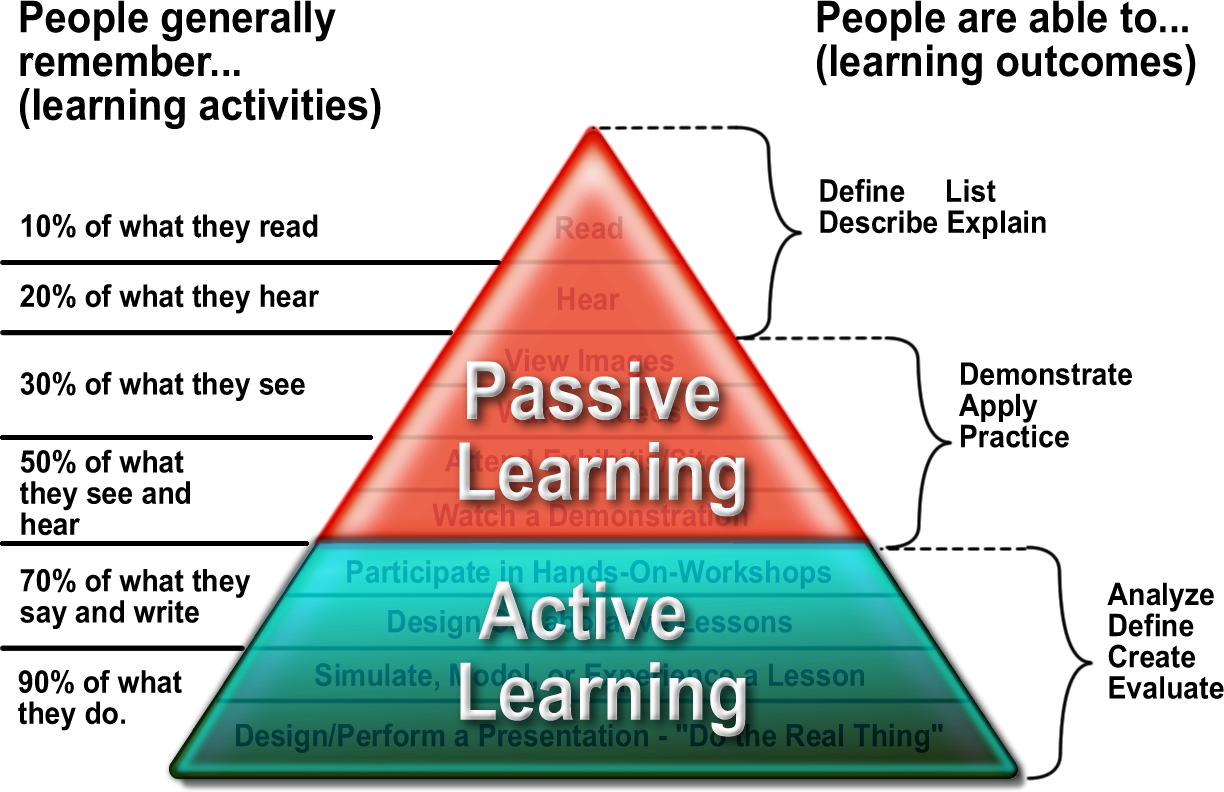
  • Using the phrase: "Acquiring new knowledge" for things like notes and readings makes that process less painful for students
  • Using the phrase: "Practicing" for labs, worksheets, and activities makes them more intriguing for students.
  • Being able to ask the students: "Are you ready to assess?" and being okay if they say no, is powerful.
  • Being able to prescribe specific lessons, notes, readings, activities to improve student performance on specific topics is POWERFUL!
  • Hearing my students talk about Autonomy, Mastery and Purpose and understand my role in this process is enlightening for all of us.
  • The phrase: "You just need more practice" is a lot less threatening than a poor grade and a you don't know this.
  • Without trying, I've set up a growth midset where my students all believe they can achieve the objective and don't stop practicing until they do.
  • There are some students that need to sit near me to stay focused.
  • Size of the room makes a HUGE difference in the ability to do this style of classroom management.
  • Asking students to check in with me, or show me an assignment or quiz after it's complete cuts down on my grading and increases my feedback.
  • There are some times lines that students have to wait in while I help another students that needs my attention. (Gotta work around this).
  • Students work independently much faster, get more opportunities and are more accurate than when working with me.  At times not to the depth I'm able to take it to though.


What my students are saying:


  • I think it was awesome because we could do experiments for making a poster
  • I think it was fun that we get to pick our own practice, partners, and what we get to do.
  • I liked it, because we had more freedom to do what we needed to do in our own way
  • I liked it because we worked at our own pace.
  • I liked doing what I want to do when I want do it.
  • I liked how we could watch video, practice, and take the test...
  • I liked how you could work ahead easier.
  • I liked going at your own pace.
  • I didn’t like it, partners who said they were going to work go ahead. (Sometimes students want to work with someone without the realization that every student works at their own pace).
  • I still kinda needed you to tell me what to do...
  • I liked it, but its harder... we really had to read the procedure for the lab instead of you telling us what to do.
  • It was harder, I felt off schedule.
  • I didn't like it, too easy to get distracted.
  • I liked it because with the group i could focus more.
  • I liked that I got a lot more stuff done.
  • I like getting to choose when we take our tests.
  • I liked being able to figure out how much practice we needed.
  • I liked how we worked at our own pace.
  • I liked how we got to work in groups.
  • I liked the schedule.
  • I didn’t like having to turn the quiz in to you. (No place to hide!!)
  • I didn’t like the organization of the room. ( I need to think about ways to roganize the room.)
  • If someone is doing something more interesting it might be distracting. (We had laser pointers out that distracted many 11 year olds.)
  • I didn't like people around you distracting you
  • I think it's hectic because people were doing different things
  • I didn't like how loud the room gets.
  • I didn't like how some students were not focused on what they needed to do.
  • I liked how everyone was so relaxed and doing what they wanted.
  • I got a lot done
  • I liked not having to wait for the other person to finish, I could move at my pace.


What's next?

  • Students are finishing my curriculum early with classes left to work on a topic of their choice.  Remembering to focus on "Recovering" topics they weren't totally understanding or "Discovering" a new topic that interests them.
  • I will post student work created from their personalized learning plans on my Student tech blog located here.
  • Collect summative assessment data and compare to a non-personalized environment.
  • Continue to develop new activities and lessons to support each learning objective.
  • Continue to "flipteach" and record my lectures and labs for students to work at their own pace.
  • I'm presenting on this topic with hard data and results at METC in St. Louis.  You should join me!
  • E-mail @stumpteacher to see how I'm doing.  Everyone needs a mentor!

Want to read more? Read about how Personalized learning got started in my classroom here!

Wednesday, February 9, 2011

PROOF! Time travel does exist!

This post is about grading...

What happened?
About 4-5 years ago we began a journey to reform our grading practices and implement district wide K - 8 a standards-based environment.  Through much change, courageous conversations and lots of bravery teachers began to see the "new" (as they called it) way of grading provided them with new insights into their teaching and grading practices.

We were on the road to greatness.  I "drank the Kool-Aid!"

Not to take too far of a detour but my teaching, assessments, and classroom interactions are much more focused, more meaningful and bottom-line kids are learning more and having fun, and better yet so am I!

Self promotion section:
My website to find more resources on how I use Standards-based grading (SBG): http://www.kirkwoodschools.org/faculty/mcgeech/
My resume with presentation I've presented on SBG and more: http://cmcgee200.blogspot.com/p/programs-and-presentations-facilitated.html
My dissertation resource centered around SBG: http://cmcgee200.blogspot.com/2011/01/dissertation-resources.html

1.21 Gigawatts Marty!!!!
So here's where the time machine comes in...  Overheard at a meeting the other day:
"How are we going to teach these kids responsibility if we don't put it into their grade?"
"How are these kids going to be successful in high school if they don't do their homework?"
"Kids will not learn (insert subject here) unless they practice 15-20 problems every night, and I cut that back."

That was it.  It's official, we've gone back in time.

Advice for Leaders
A piece of advice.  When implementing a new program, when instituting a large organizational second order change process (Read Fullan's Leading in a Culture of Change.)  Understand this process will take YEARS to complete and provide your teachers opportunities to continue to develop understanding.

Change, big change, happens over time and there will be opportunities to 'slip back' (typically called the implementation dip) into the way they know, they way that 'worked.'  Whatever your position is, care for them, understand they are uncomfortable and let them know you understand they are taking a risk.  Only through risk will true growth occur.

Setting a course
Here's to hoping we can right the ship, begin the conversations again and continue the journey.


Image credit:
BTTF: http://www.we-make-money-not-art.com/wow/backtothefuture_backtothefuture.jpg
Course: http://quityourdayjob.com.au/wp-content/uploads/2010/07/bttf2-date.png

Monday, November 29, 2010

Grades: The letter doesn't tell the story.

A colleague of mine challenged me today and asked me:

"How would you feel, Mr. Administrator, if a teacher in your building had 10 D's/F's?" (out of a team of 100 students)

After a long pause, surprised by the question, my response was: "Where did they start?  Are they ready for this content?  Are they finished learning?"

(A little background here:  I am a 6th grade teacher and I am a proponent of standards-based grading and use it daily in my classroom.  A D/F is reported based on student knowledge of specific content or objectives scoring at the beginning level of a rubric.)

Where did we start?

Considering the gain in students is so much more important to me than the final product shown on the report cards.  Although every teacher and school is evaluated by the standardized assessment and the final product on the report card, considering where a student began and charting student growth throughout the quarter is what is so important to me.  Seeing these students as "D/F students" is missing the point.

Understanding a few things about them is key: (Isn't this indicative of every student?)

1.  They each came in to my room with a very different starting point than other students.

2.  They each have VERY different needs.

3.  They each have shown tremendous growth.

4.  They each are receiving VERY different services and interventions, none of which support my content.

5.  They are all wonderful, motivated, and successful students at what they do.  It's a shame they are all measured by the same stick.

6.  Grouping them as a D/F student right now is a disservice to them.

Bottom line, have these student's shown growth...Yes!

Is it as much as I would have liked, No...But we aren't finished....

The beauty of SBG


That's the beauty of standards-based grading.  We're not finished yet so there is ample time to make that D or F (the beginning range of our rubric scale) higher.  The most important question is not, how would I feel about it as an administrator, the more important questions are.....

True differentiation


1.  What am I doing about it as a teacher to continue to care for and nurture learning in my classroom to continue to see growth through the last three weeks of the quarter?

2.  How can I connect with these 10 (and the other 90) students to propel their learning past the beginning stages?

3.  What support can I ask for outside of my classroom to make the gains necessary in these students, while of course, never losing sight of the other 90?

4.  What tools can I tap into to personalize their learning?

Let the last three weeks of 2nd quarter continue...

Sunday, September 26, 2010

My first shot at an Infographic...

This is my first attempt at an infographic.  I'm trying to find new ways to communicate information to parents.  Any thoughts?  Any feedback?  Put it in the comments section....

Monday, August 16, 2010

Homework and Deadlines

http://www.flickr.com/photos/52636849@N00/
We have been battling for years on homework.  To assign it, not to assign it, to count it, not to count it, what to assign, how much to assign, etc.

There are many new books and resources about homework practices.  My opinion, right now because it will probably change 20 time sin the next year, is that if it's meaningful and has a purpose, then it needs to be assigned, if not, don't assign it.

Here is a great article on how deadlines can be "fair and unbalanced" when it comes to homework and projects: http://goo.gl/HGWg

Tuesday, December 1, 2009

How my teaching has changed since Standards Based Grading...

When I first started teaching high school chemistry all I had was a textbook and a mentor. I was instructed to follow my mentor’s lesson plans and just do what he did. We used the textbook as gospel. We taught exactly what was in the textbook, in the exact order it was written, with very few exceptions. We labored the students with worksheets and problems from the textbook. Even our tests were copied straight from the resources provided. After a few years of textbook adoptions and curriculum changes as a result it became clear to me that the textbook was almighty and whatever it says, goes.

At the time I began teaching in Kirkwood I was enrolled in a class called Curriculum Analysis and Design. This is where I learned about “Backwards Design” by Wiggins and McTighe. This helped me begin to write learning goals for each of my units. These goals were my way of informing students of what they were going to learn, how they were going to learn it, and exactly how they were going to be evaluated. After many years of revising, our sixth-grade science curriculum is now sound, created through backwards design and supported by various textbooks and resources.

We use our GLEs to write learning goals and accompanying scoring guides. We evaluate students using these scoring guides in a standards based environment. We use the learning goals to write our assessments. Our assessments drove us to adopt resources and textbooks. These resources and textbooks led us to develop daily laboratories and activities to support student learning. The process of developing, revising, and communicating the curriculum never ends for us. With the support of our science facilitator and compassionate sixth grade science teachers we have created an excellent curriculum and have impacted student learning and achievement.

Every day I use the learning goals we created as a “look for” in my classroom. A look for is a guiding statement that focuses my attention on what students are learning each day. I carry a class roster with the unit’s learning goals at the top with me every day. I take diagnostic data on my students, give feedback, and document that information into an un-weighted category in my grade book. This way I can keep track of student progress, help students who need it, and challenge those who have already met the standard. I evaluate each student using the scoring guide designed for that goal. This allows me to ensure that each student is achieving the learning goals set forth by our curriculum and by the state of Missouri. Since this data correlates with the GLEs, we can also correlate performance to our end-of-unit exams, and further onto the MAP assessment.

As Stephen Covey wrote in 7 Habits of Highly Effective People, “to begin with the end in mind means to start with a clear understanding of your destination.” The learning goals are my destination and my students know that. The design of the curriculum has made me a better teacher by allowing me to ensure that every day my lesson has a goal. Students are being evaluated and are receiving feedback every class based on their performance on a measurable objective. Learning goals are a great way to keep me organized and to keep students focused on achievement each day. I’m happy to say that the students in my classroom are better off today because of these changes and I’m excited about where we are headed as a 6th grade science department.

Check out my website to see what we do (http://www.kirkwoodschools.org/faculty/mcgeech/), and soon you can check out our 6th grade science Moodle page to see all of our curriculum materials.