This is a blog about my life, education, challenging discussions and what I learn. The mission and goal of this blog is to promote the sharing of ideas and resources to improve student performance.
So this process of developing learning goals for classrooms brings about amazing opportunities for demonstrating great work by educators. Below is a third grade class. The teacher developed a proficiency scale for this learning goal:
Students will be able to compare how where you live affects how you live.
3 - Student accurately describes how Environment/Climate affect (two) clothing/food/housing
2 - Student accurately describes how Environment/Climate affect (one) clothing/food/housing
1 - Student accurately describes how Environment/Climate
After our conversation we proposed a student formative assessment opportunity. We created a graphic:
We added it to our proficiency scale. Then we posted that scale in the room. When proposing the learning goal as a question. Based on this student performance was drastically improved. Below are examples of student work: This student was developing in their knowledge. Before, this student wouldn't have been able to answer anything in a written format. In this case the teacher decided to allow the student to simply tell her what they know about the topic, she wrote down the information.
In this scenario below the student needed differentiation strategies to allow them to communicate what they knew without being held back from a diagnosis of difficulty with written expression. The teacher provided the scaffolding of the boxes and numbers to provide the student with the opportunity to demonstrate what they knew. The addition of the boxes allowed the student the necessary tools to be successful and met the grade level expectation.
This student didn't need any scaffolding, also didn't need to write a ton and demonstrated and understanding of the content.
After this assessment the student below demonstrated partial mastery and needed either more time or more scaffolding to be successful. Conversations with this student are ongoing.
And of course no set of examples would be complete without an exemplar. This student has never written this much but having the rubric available gave the student the inspiration to write a ton. This is truly amazing for a 3rd grader!
After looking over this student work we had a conversation around these following questions:
What do we notice about the student work that supports our proficiency scale?
What do we notice about student work that was an unintended consequence of the proficiency scale?
Is the "4" of labeling all three really stretching to a transfer level? If not, is the a question or experience that we could add to reach the transfer level of understanding?
Since then many more proficiency scales have been completed, here is one more example. You tell us, does it answer our questions above?
I'm excited to see where this goes next!!! Way to go Betsy!
I'm reading about a new way to think about "school", here are some of my takeaways:
Key question:
If we don't "Teach" it to the students how will they know they learned it? And how will we know?
Any change, such as this brings "excitement and momentum, mixed with discomfort and disequilibrium."
Moving away from classrooms that function in isolation, and toward collective intentionality and a team committed to thinking and learning collaboratively within a shared framework.
What does it mean to developing intentionality:
Type, condition and placement of furniture
Values, roles, organization of materials
Use of wall space
Way aesthetics invite learning
Ways we can share ownership
All furniture is evaluated based on condition, purpose and placement
Materials were questioned as to age and condition. Looked at for potential for formal instruction and open-ended learning.
Careful selection of materials and placement of furniture supported creation of spaces within the classroom for:
Publishing areas with writing utensils, book making supplies
construction areas with block, moldings, ramps, pulleys, etc
mini-ateliers with wire, clay, paint, sewing
dramatic play areas full of costumes
Teachers and students work together to develop environments responding to interests, desires, expectations and possibilities.
Entryways to spaces are purposeful and reflect the students and teachers in the room.
Replacing of pre-made items with student generated materials.
Physical shifts are easy, conversations must be had to transition spaces from teacher-centered to child-centered, teaching to learning, every choice reflecting our values and our identity.
Shifts in time must also reflect these values:
Minimize large group lessons and replace them with small group, collaborative and individual work.
Differentiate for children
Create time and space to analyze the BIG questions
Balance formal instruction with inquiry
Reinforce collaboration
Develop strategies to encourage on-going projects
Analyze standards in borader more informed ways
Nurture interests and intrinsic motivation toward relevant meaningful work
Professional development must reflect these values.
Change is not always pervasive or linear. Each teacher has the right to have space and encouragement to construct their own shift.
HOW we learn far outweighs WHAT we learn.
What we learn has to stretch far beyond memorization and google-able results.
A space where our learning Includes:
Critical thinking
Collaboration
Communication
Creativity
Research
Innovation
As children seek to answer their questions their autonomy, ownership, collaboration, and engagement increases. Excitement momentum and accomplishment also grows.
Inquiry and projects are not separate from rigor or releveance but interwoven.
Challenge: making this learning visible and making the process transparent
Does this sound amazing!?
Exactly where I would want to work and what I want for every one of my students. I think I work EXTREMELY HARD to make this space real for my students. I teach middle school. Did I mention that all the above descriptors were for a pre-school. That makes it even more amazing.
Our school is investigating what is called the Reggio Emilia model for primary school students. With all the latests and greatest research surrounding our earliest learners we are investigating what works best. (more research here: http://www.reaie.org.au/) This investigation got me to thinking about the personalization we give every student in their learning. Why can this model not only make for a great preschool, but for a great ANY school. Here's an interview from a school right here in St. Louis: Maplewood
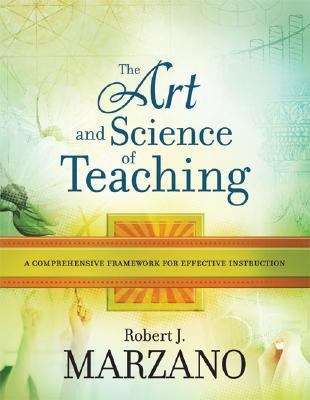
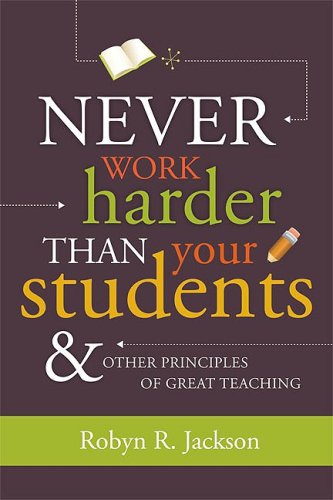
As part of our transition program for teachers who are new to the district in their 2nd and 3rd year we are having specific professional development centering around differentiation. We are using the book "Never Work Harder Than Your Students" to also infuse some culturally responsive and relevant teaching practices. The chapter is titled: "Know where your students are going." This chapter almost seems to mimic the work done by Marzano in the Art and Science of teaching, as well as Wiggins and McTighe's work on Understanding by Design. Notice the connections. Here are my takeaways from the chapter:
Learning goals are more than what students do during a day, it's about what learning they should walk away with
Teachers know objectives are important, but how to create objectives, how to determine whether or not student have achieved them remains for many to be very difficult
What do we, my state, and my community want kids to know by the end of this year/unit (learning goals)
Develop assessments to determine mastery
Develop scoring guides to measure proficiency and to utilize for feedback
Develop lessons/activities that lead to proficiency
Develop learning goals with the focus of whether the learning is a content or a process
Challenge your students to exceed the standards and provide room for differentiation
Understanding what the standard is allows you to:
think through the goal
determine if it's content or process, which leads to developing or finding appropriate lessons/activities
think through steps to accomplish or acquire the content or skill
Make learning goals concrete = how will you measure whether or not students have achieved this goal.
BRIEF ASIDE:
I do not like using the word "understand" in my learning goals. You cannot measure understanding. Replace the word understand with what you are asking kids to understand specifically and communicate how you will measure that understanding. From this I usually pull out my DOK wheel and begin to seek out the specific word, phrase, or skill we want kids to be able to answer. This way we know what mastery looks like, sounds like, or feels like in our classroom.
How to make learning goals concrete:
How will it be measured
build criteria for mastery (rubric)
break down into smaller chunks (steps to acquisition or success)
Goals should represent the floor (minimum expectations) not the ceiling.
Goals representing the floor allows for differentiation and extension opportunities
Determine how to:
know what it looks like when students have mastered the objective
how to collect evidence of that mastery
how to collect evidence over time
Work with a team to determine exemplars and acceptable evidence of mastery
The test is not the be-all-and-end-all BUT it is the "clearest articulation of the objective"
Currently wrapping up my doctoral studies, an assignment was to think back to your educational career. Remember the things that shaped you, molded you, and created the leader, learner, and educator you are today. Keeping that in mind I went searching for the perfect web 2.0 tool to create my educational timeline. I settled on Timetoast.com.
Although I like the interface and the ability to add pictures, links, etc. I struggled with the inability to PRINT and analoge copy. It was a fun assignment and seeking the right tool was even more fun.
What’s wrong with PD? (this is the crabby section so just skip over this :-))
To borrow a phrase from business experts like Seth Godin and Mark Hurst: professional development “is broken.” (for more on things that are broken check out: http://goodexperience.com/tib/) Professional development (PD) is ineffective and inefficient, Dr. Reeves believes there are a number of reasons that that has occurred. First of all, PD is designed in the same format as an autopsy. PD is often designed as “a procedure that is undoubtedly filled with data but rarely improves the health of the patient” (Reeves). This means that the information and activities that are completed and deemed as PD really have no real translation to students or student achievement. For instance, the data from the MAP test does not get returned to the school until the following year. This gap in time makes PD focused on the MAP assessment as effective as an autopsy. There are no tangible ways to translate that specific data into a usable and vital resource to plan professional development.
PD is often planned and organized in too short of a time period. I often overhear administrators say, “What do you want to do with the February professional development day?” The other replies, “I don’t know, we’ll figure it out in January.” This lack of focus on the program through a holistic approach leaves the teachers without the ability to make a lasting change in teacher or student performance. The implementation of PD without an overall idea of where the staff is and where they are going creates an ineffective use of time and resources.
PD lacks purpose. There are very little ties from professional development to performance in the classroom. There may be new ways to do something, new strategies to use, but they are often presented in isolation. Concepts and skills do not build, loop, or cycle in order for teachers to create lasting change. Professional development without purpose and ties to student performance has no impact.
PD introduces too many new programs. The law of initiative fatigue states that “when the number of initiatives increases while time, resources, and emotional energy are constant, then with each new initiative—no matter how well conceived or well intentioned—will receive fewer minutes, dollars, and ounces of emotional energy than its predecessors” (Reeves). WOW! Powerful statement. If you relate this to juggling, imagine that there is a limit to how many balls a juggler can keep in the air at one time. Educational initiatives are much like the balls in the air. How can we as administrators continue to put more balls in the air with each professional development day and just hope teachers get better from it? The lack of focus on a specific measurable objective yields no overall response. As leadership continues to add more and more items to the workload of educators, continues to under utilize systems thinking into the overall plan, this causes each new task to decrease in effectiveness. Eventually faculty and staff arrive at the point where nothing successful is happening and it is hard to determine why.
Research shows that the “largest effects were found for programs offering between 30 and 100 hours spread out over 6-12 months.” (Darling-Hammond, 2009)
“If you were to decide in the months ahead to substitute high-impact learning for meetings, assemblies, and workshops, you may decide that you are not giving up very much after all.” (Reeves)
How do we fix it? (YES, All the answers!!!!!)
First of all, choose a topic. Reeves states that the topics can include improving teaching, curriculum, assessment or leadership. He says that it must be something determined through a comprehensive needs assessment. Then, while implementing this plan, administration must focus on three aspects of PD. The first is student learning and how the actions of PD reinforce or seek to improve student achievement. The second is that there must be rigorous measurement of adult decisions. This means that administrators examine not only what teachers know, but what they do every day in their craft. Finally, there must be a focus on people and practices. We, as administrators, must focus our energy on the individual needs of the teacher as a learner and examine his/her practice to see if there are changes being made as a result of PD.
Reeves states that successful PD has 9 characteristics:
1.Comprehensive needs assessment – “Plans contain evidence of school leadership decision regarding the use of time, assignment of staff, and allocation of resources that were directly related to student needs.”
2.Inquiry process – causal relationship is determined between teaching and leadership practices and student results
3.Prioritization – six or fewer priorities
4.Specificity – directly related to academic expectations for students, grade levels, skills, and individual students
5.Measurability – objective statements can be made about progress, or lack thereof, to the achievement of goals
6.Achievability – goals were established to close gaps in there to five years
7.Relevance – represented as urgent, critical needs and are clearly aligned with needs analysis process
8.Timeliness – specific dates, seasons, months, etc. for assessment and data collection
9.Monitoring – data to be monitored, along with intervals to examine and reporting progress, student results and professional practices are used
How does this impact the superintendent? "Inspected by number 2."
The role of the superintendent is to be the leading learner in the district. The CEO/superintendent cannot forget that his/her role in education is not only to lead the district but to continue to the role of lead learner for the district. The superintendent should make time to attend professional development, learn what the teachers are learning, and then see the learned skill or concept in action. Similar to the show Undercover Boss on CBS where CEOs go undercover in their own companies, superintendants should do a quality control on how their district personnel are being challenged, improved, and developed to become better.
Every once in a while I will buy a shirt and somewhere on it will be a sticker that says “inspected by number 2” (or some other number). This is equivalent to quality control of the product at hand. That quality control needs to not only come form the person assigned to that responsibility but also seen first hand by the lead learner: the superintendent. Focusing on that role and assisting those within the district in not losing sight of developing teachers and all things that impact student learning will pay off when evaluating the effectiveness of the superintendent. After all, being a successful leader of a district where kids are not learning will make for a very short tenure.
Understanding the law of initiative fatigue is a crucial piece to the success of the district. Being aware of where the staff is as a whole, what they are learning, why they are learning it, and challenging administrators to protect teachers will focus the staff. The focus of the superintendent should always be on improving student achievement through creating the direction/vision of the district and what initiatives are needed based on a thorough needs assessment. Nurturing PD as a crucial piece to the success of the district will allow for a successful tenure as a superintendent.